Origin and history
The history of Glaoui rugs is notable even in the name: rather than taking it from the Aït Ouaouzguite tribe of the Telouet area, these rugs are associated with Thami El Glaoui, a Moroccan political figure of the late nineteenth and early twentieth centuries. It is not an easy story, but it is another reminder of how Moroccan women transformed hardship and imposed labour into textile skill, artistic expression and a means of support for their families.
A highly complex construction
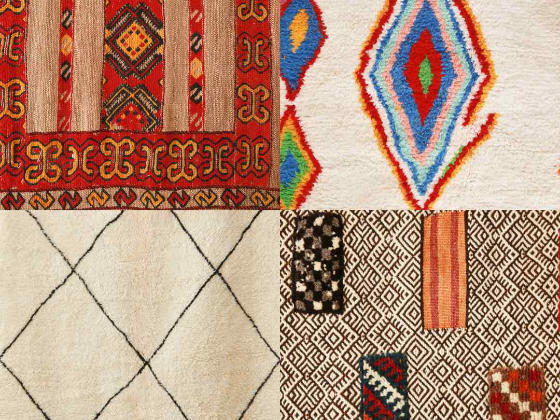
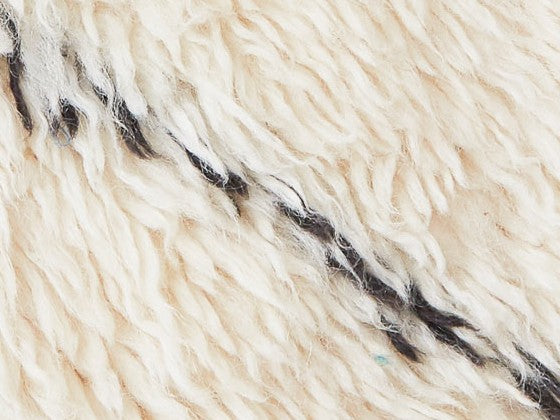
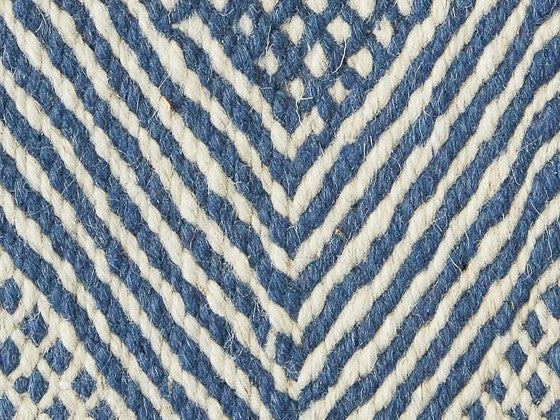
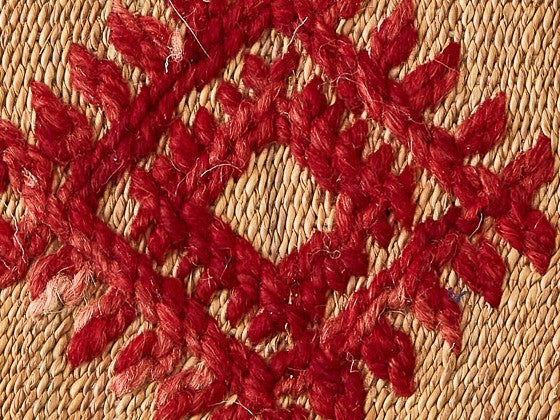
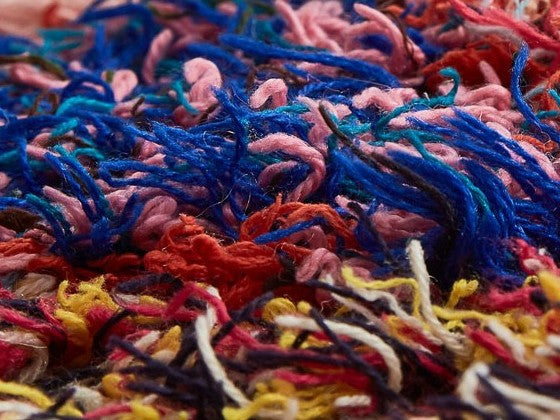
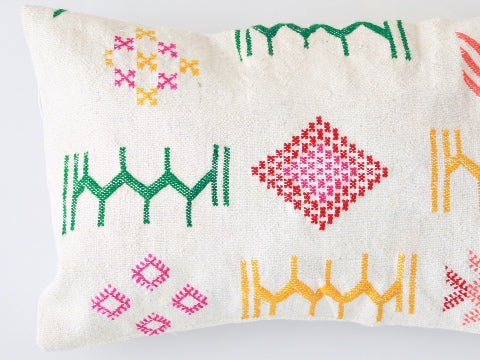
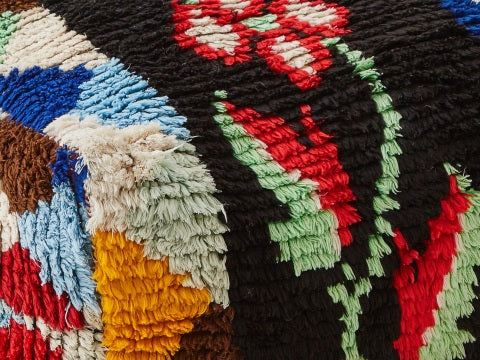
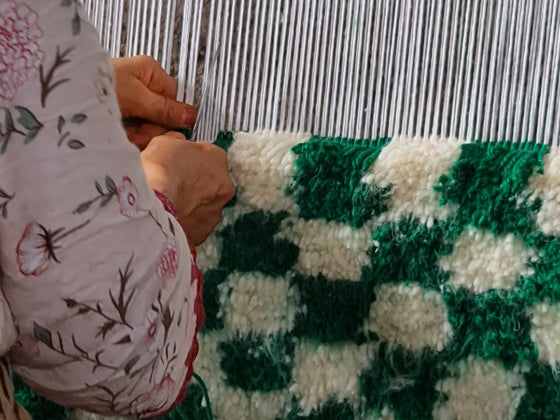
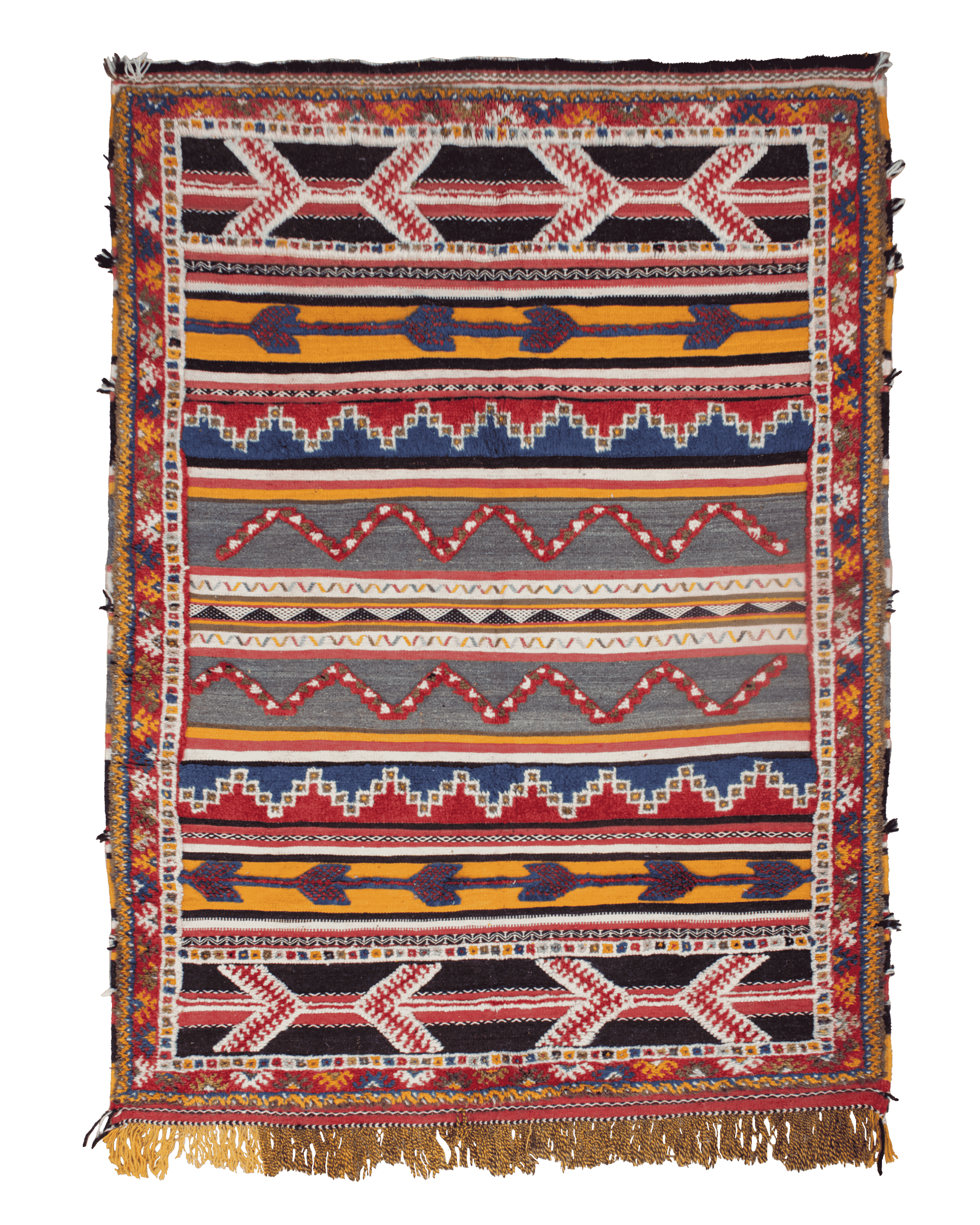
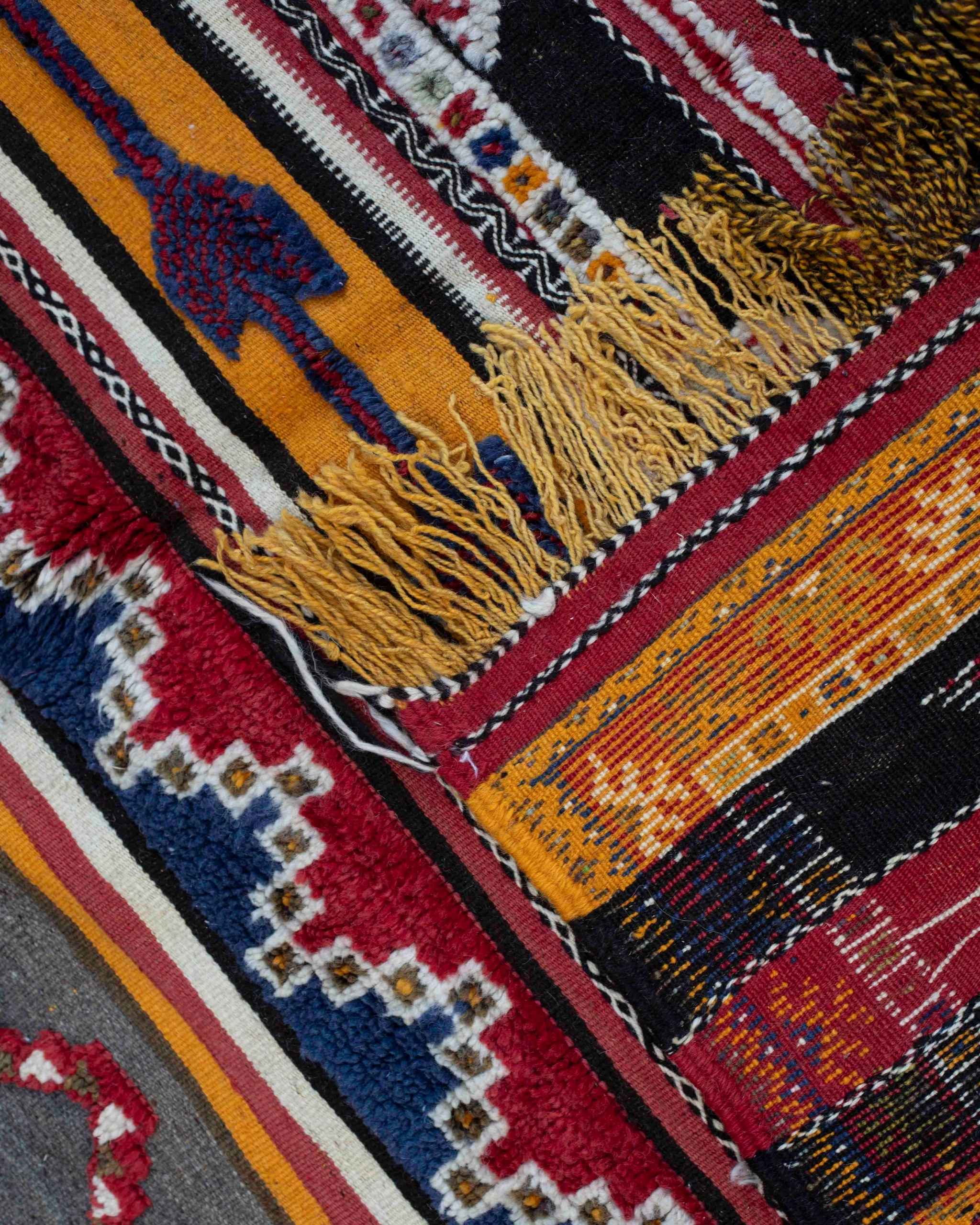
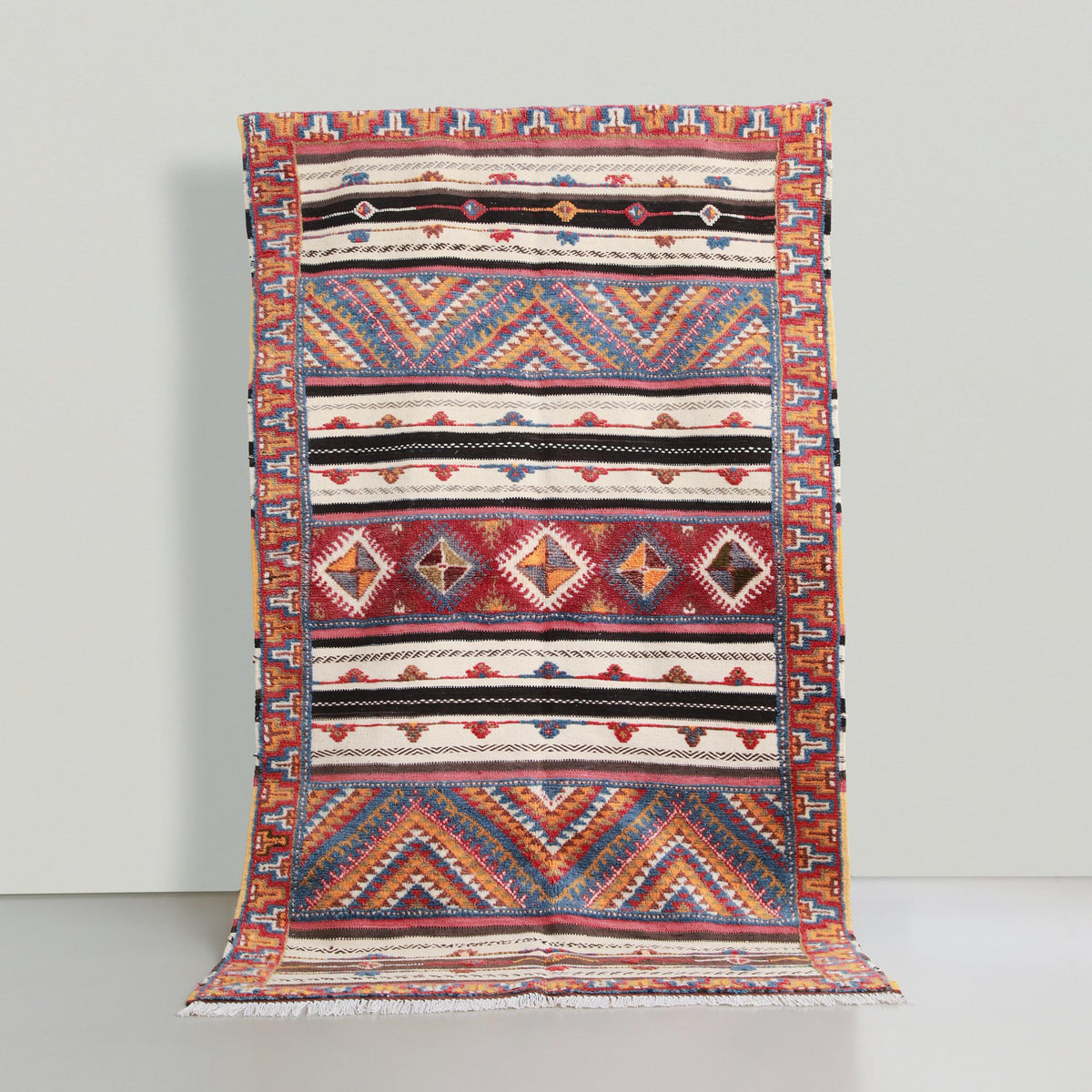
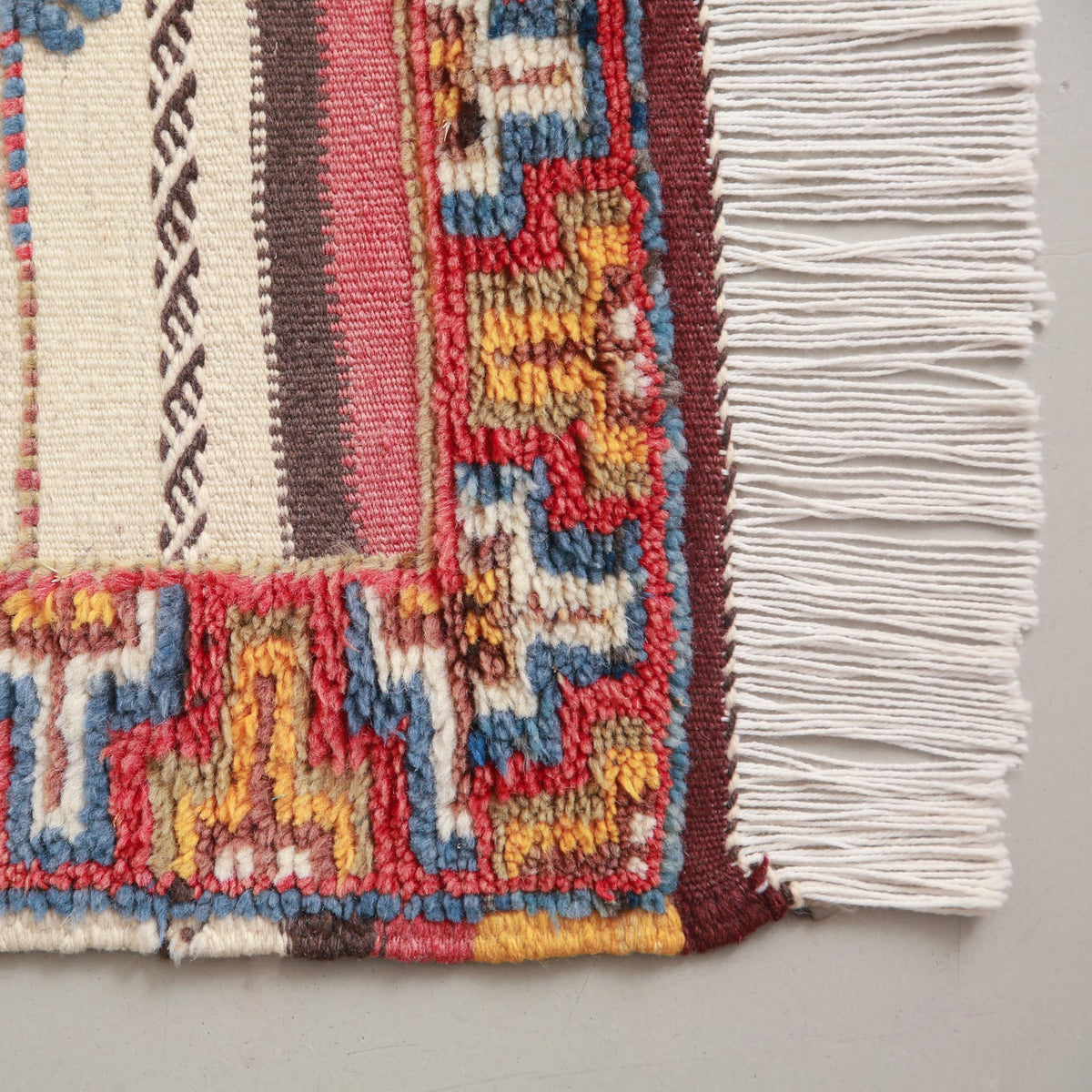
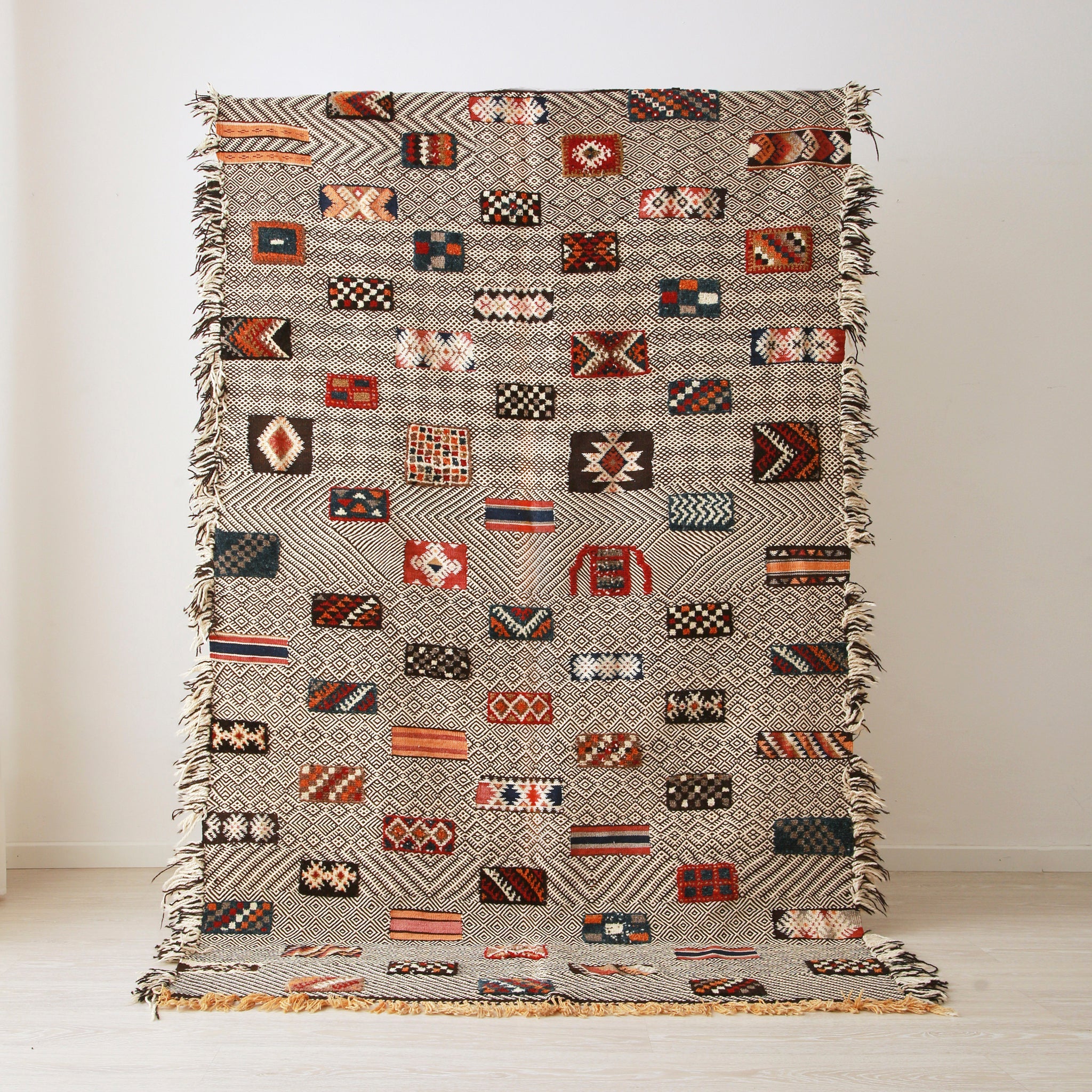
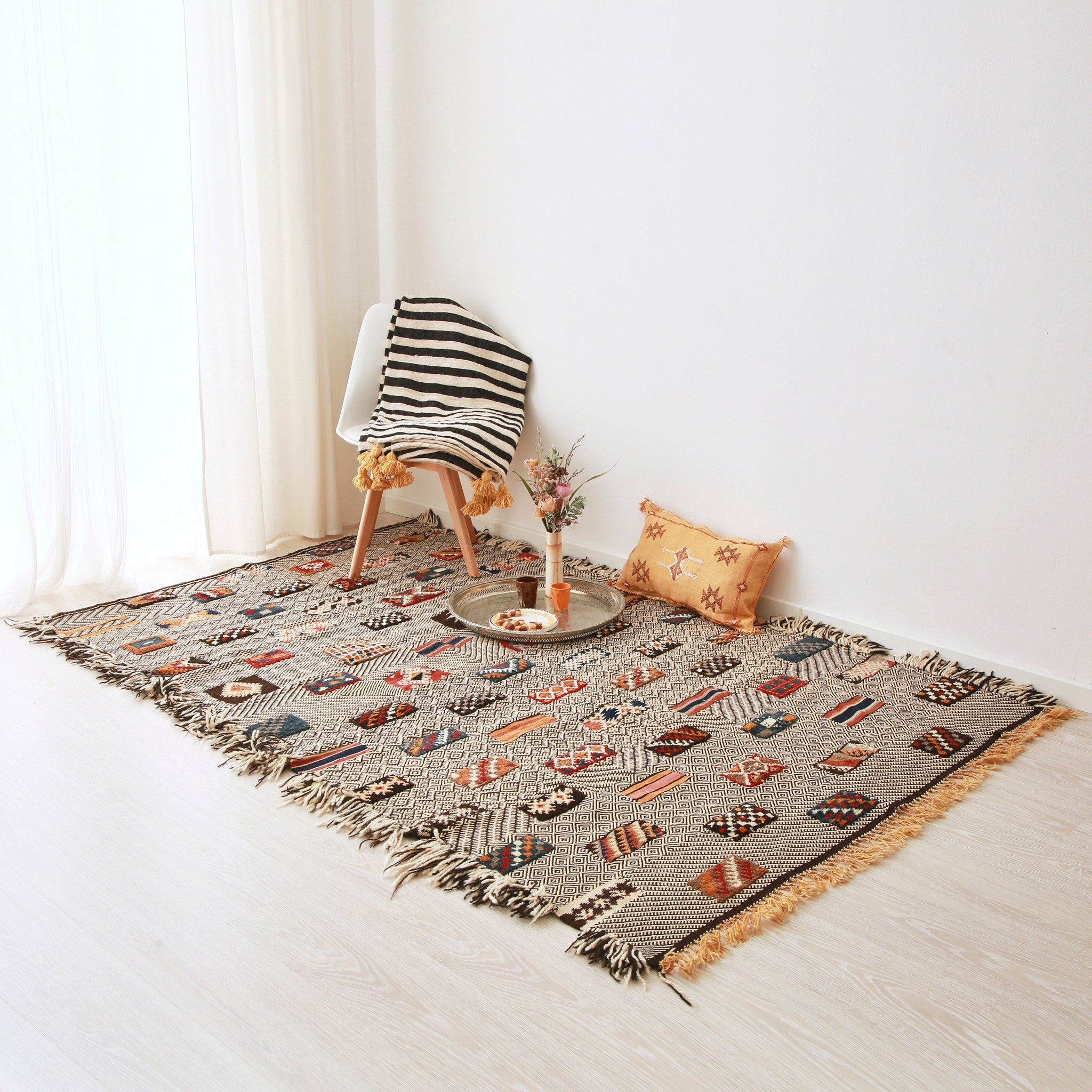
What makes these rugs especially distinctive is their structure: they combine woven bands, knotted bands and embroidered sections within the same piece. Among the most remarkable details is the chedwi technique, a very complex form of embroidery that twists a black and a white wool thread together to form diagonals, curves and other motifs.
Materials, motifs and palette
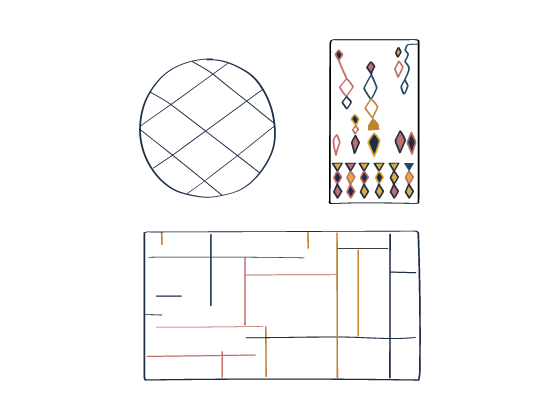
When made in their original region, they may use wool from the local Siroua sheep, a rare breed found only there. Their colours are generally natural, while their decorative compositions are rich with symbols, geometric or floral motifs, stylised animals and other references to the natural world. The result is a rug with strong visual density and a deeply rooted sense of place.