
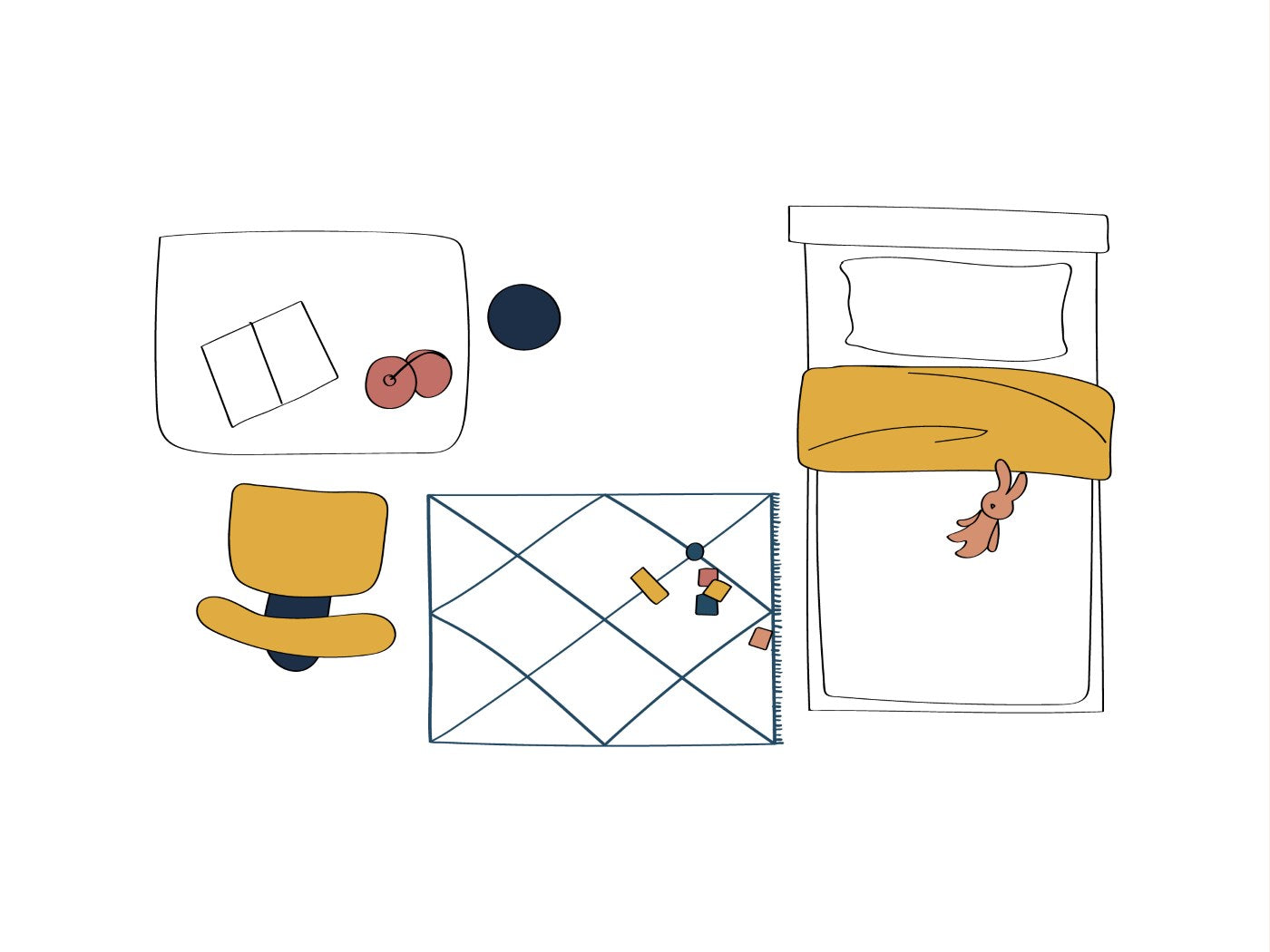
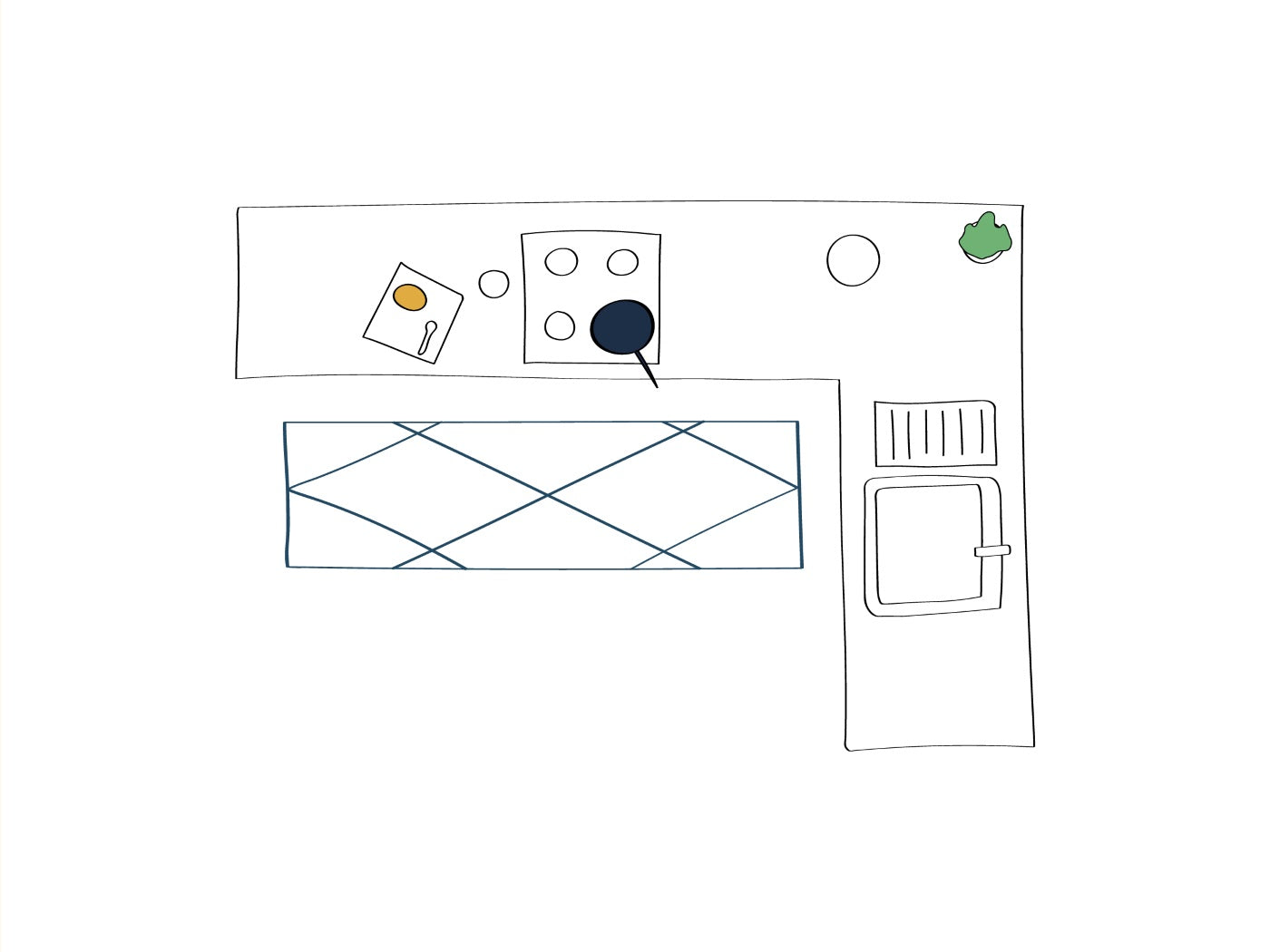
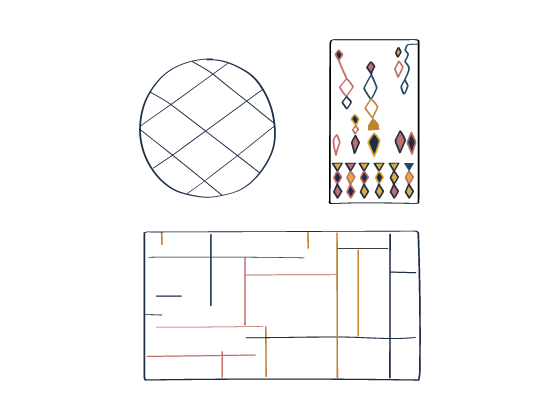

Putting a rug under the dining table is not the right choice for every home, but when the space allows it, it can completely transform the dining area.
It is an aesthetic, symbolic and practical choice all at once. It requires enough space, a certain sense of how you want to live in and furnish your home, and the desire to give the dining area a clear role: not just a table and a few chairs, but a place devoted to being together, sharing meals and welcoming guests. On the practical side, a rug protects the floor from chair movement, softens noise a little and creates a real visual “island”, especially in open-plan spaces.

But it needs to be chosen carefully. This rug will live under a table and under chairs that move every day, in close contact with food, crumbs, liquids and small domestic accidents. So falling in love with a colour or a pattern is not enough: you need to think about size, material, type of weave and maintenance.
In this guide, we start with the simplest question: rug under the dining table, yes or no? Then we look at sizes, shapes, materials, weaves and a few common mistakes to avoid before buying.
Rug under the dining table: yes or no?
The short answer is: yes, if the rug is large enough, proportionate to the space and chosen in a suitable material.
No, or rather not necessarily, if the room is too small, if the chairs would end up outside the rug or if you do not want to deal with daily care.
➜ Yes, when the rug helps define the dining area, balance the proportions of the space and make the table the visual centre of the room. In an open-plan living room, for example, it can naturally separate the dining area from the sofa area without the need for walls or dividers.
➜ Yes also when you want to protect a delicate floor from the constant movement of chairs. Parquet, resin, cement tiles and natural surfaces can all benefit from an extra layer of protection, as long as the rug is stable and large enough not to become an obstacle.
➜ Think twice, however, if the table is very close to a wall, a door or a narrow passage. The rug needs room to “breathe” and should not get in the way when someone serves food, gets up from the table or walks past the chairs.
➜ Think twice also if you already know you do not want to deal with crumbs, small stains or regular maintenance. A rug under the dining table can be practical, but it is still a textile placed in an area that comes into daily contact with food.
The point, then, is not simply whether a rug under the table is beautiful or practical. The point is understanding whether it can truly work in your room, and in the way you live in your home.
The size rule: the rug must follow the chairs too
The most common mistake is forgetting the real footprint of the chairs when they are pulled back. That is where the problems begin: the chair moves off the rug, the edge curls up, and the whole movement becomes awkward.
A rug under the dining table must also accommodate the chairs in the position they are in when someone gets up.

The practical rule is this: the rug should extend at least 60-70 cm beyond each side of the table. With large, upholstered, armchair-style or particularly deep chairs, 80 cm is even better.
If the chair legs end up outside the rug, the edge can lift, bend or become damaged over time. It also increases the risk of tripping, especially in a passage area or close to the kitchen.
A simple trick for taking measurements
To avoid mistakes, pull the chairs back into the position they are in when someone gets up, then mark the outline of the future rug on the floor with masking tape. That will be the minimum size to consider.
When in doubt, a few centimetres more are better than a few centimetres less.
Suggested sizes for the most common table formats
The sizes below are approximate, but they give you a realistic starting point.
| Table size | Minimum recommended rug size | More comfortable size, if space allows |
|---|---|---|
| 120 × 80 cm | 240 × 200 cm | 250-260 × 200-220 cm |
| 140 × 80 cm | 260 × 200 cm | 270-280 × 200-220 cm |
| 160 × 90 cm | 280 × 210 cm | 300 × 230 cm |
| 180 × 90 cm | 300 × 210 cm | 320 × 230 cm |
| 200 × 100 cm | 320 × 220 cm | 340 × 240 cm |
| Round Ø 100 cm | Round Ø 220 cm | Round Ø 240 cm |
| Round Ø 120 cm | Round Ø 240 cm | Round Ø 260 cm |
| Round Ø 140 cm | Round Ø 260 cm | Round Ø 280 cm |
These indicative measurements follow the rule of adding 60-70 cm on each side (120-140 cm overall). If you have deep, upholstered chairs or chairs with arms, consider the “more comfortable size” column. If space is limited, always test the layout with the chairs pulled back before buying.
Also pay attention to the space around the rug: it should not come too close to doors, storage furniture, kitchen islands or narrow passageways. The rug should define the dining area, not complicate it.
Rug shape: how to match it to the table
As a general rule, follow the shape of the table and the proportions of the room. It is not an absolute law, but it is a good starting point.
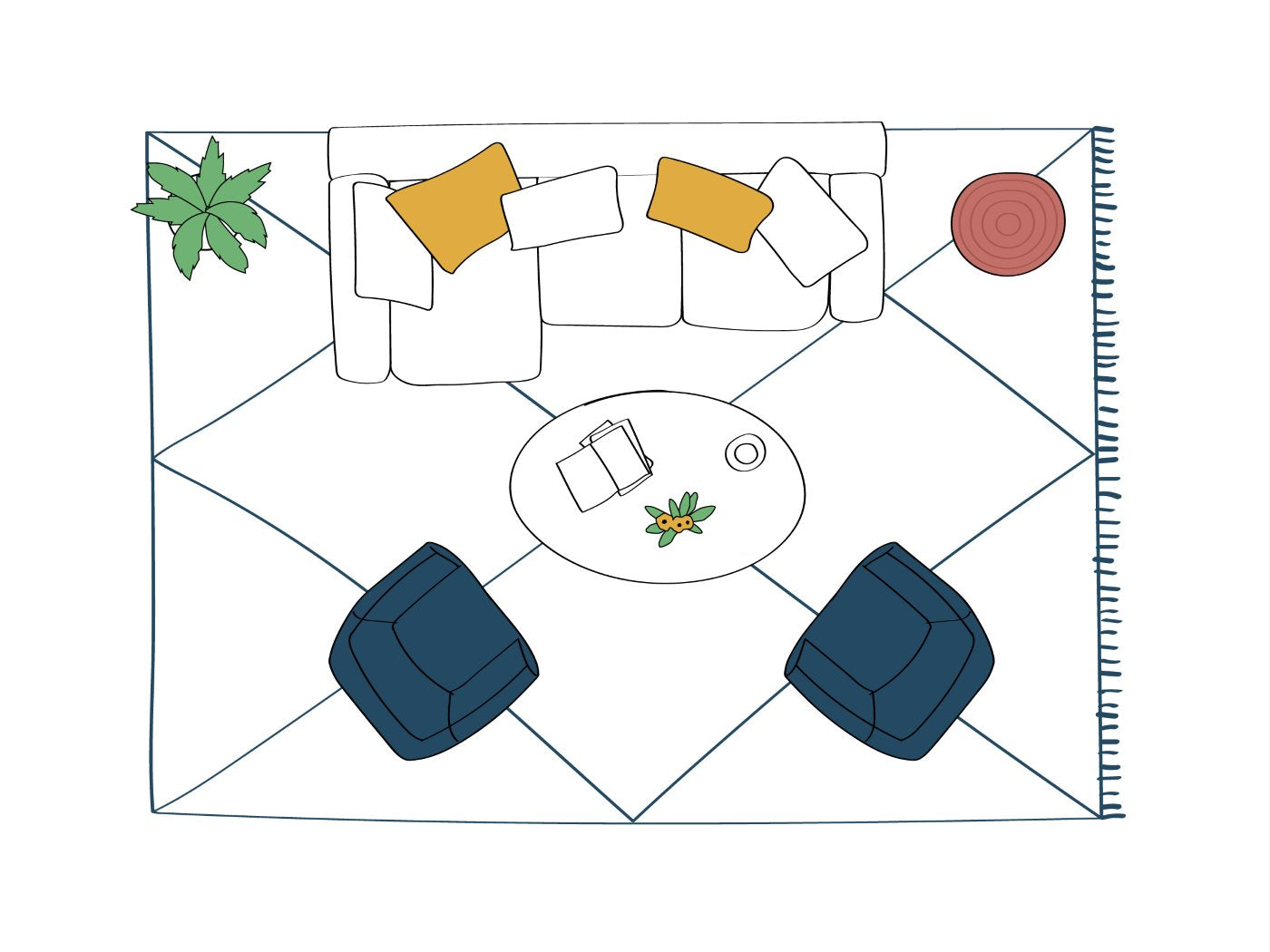
The diagrams below help visualise the most important principle: the rug must not only contain the table, but also the space needed for the chairs when they are pulled back.
- Under a rectangular table, a rectangular rug almost always works best.


- Under a round table, a round rug can work, but so can a square rug if the space is well proportioned. For an oval table, on the other hand, a rectangular rug usually works well: it follows the length of the table and gives the composition more order.


- Under a square table, a square rug is the most natural choice.


➜ A round rug under a rectangular table can be an interesting choice, but it requires more care. It works best in large rooms, where the contrast between shapes feels intentional and designed. In a small room, it risks looking like a random compromise.
➜ In open-plan spaces, the shape of the rug needs to relate not only to the table, but also to the sofa, kitchen, floor, pendant light above the table and circulation paths. In these cases, the rug becomes part of the design: it defines the dining area and helps give it proportion.
What about an extendable table?
With an extendable table, start with a very practical question: how often do you use it extended?
➜ If the table is extended often, it is better to consider the larger size.
➜ If, on the other hand, the table is opened only for special occasions, you can size the rug around the everyday setup and accept a small temporary compromise when you host more people. The important thing is to know it in advance.
If the extension only slightly increases the size of the table, you can consider a slightly larger rug. If the size difference is significant, it is better not to choose a huge rug just for occasional use: it may look out of proportion most of the time.
Rug under the kitchen table: yes or no?
Yes, but only if the kitchen has enough space around the table and the rug does not get in the way of chairs, passageways, cabinet doors or drawers. In an eat-in kitchen, the same rules as the dining room apply: the rug should be at least 60-70 cm wider than the table on each side and should contain the chairs when they are pulled back.
For a table used every day, flatweave rugs, short-pile rugs, mixed colours or graphic patterns are usually easier to live with than pale, very delicate or long-pile rugs.
Materials and weaves: what really works under the table
Once the size is clear, the second decisive choice is material and weave. The dining room is a high-use area: chairs move every day, table legs put pressure on the same points, crumbs can fall, as well as substances that stain, such as wine or condiments.

That is why a rug under the table needs to be beautiful, yes, but also sensible for the way you live in your home.
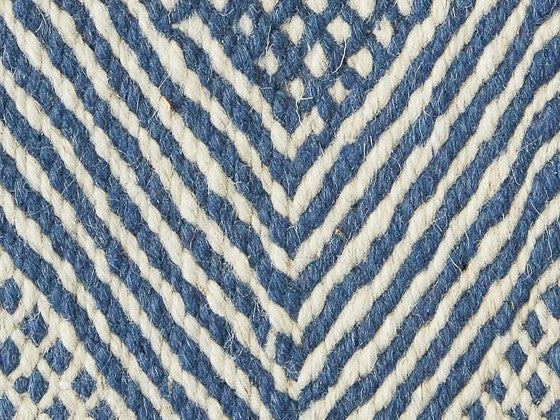
Flatweave rugs (kilim)

Flatweave rugs are the most practical choice for a dining room used every day.
➜ They have no pile, so the surface stays more compact and chairs glide over it with less friction.
➜ Crumbs are more likely to stay on the surface and can be removed with regular vacuuming.
➜ The pressure of chairs leaves fewer marks than it would on a high-pile rug.
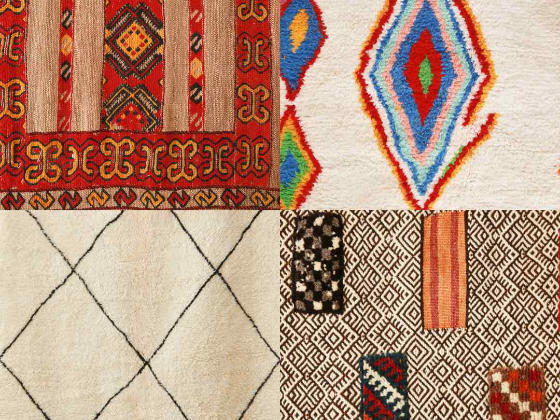
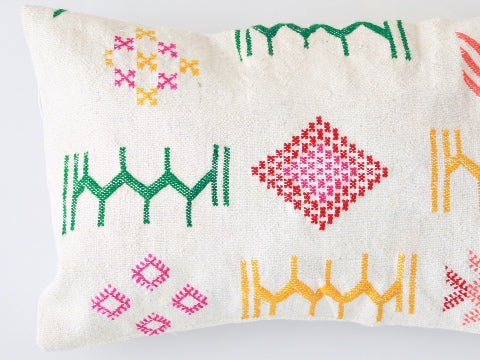
From an aesthetic point of view, kilims — called hanbel in Morocco — often feature intricate geometries, strong fields of colour and graphic patterns that can give character to the dining area without weighing it down.
That is why, among the solutions we suggest when people ask us for advice, Moroccan kilims are our first choice.
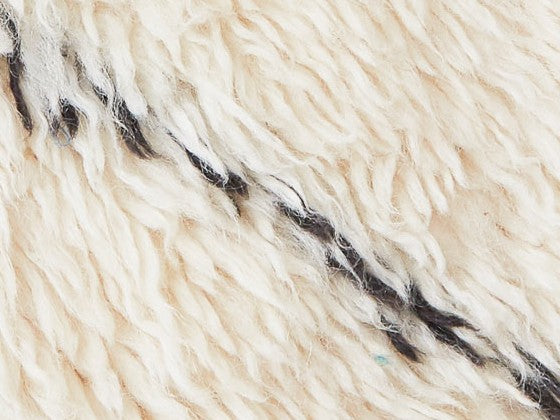
Short-pile rugs

If you want more softness and warmth underfoot, a short-pile rug can also work well under the table.
➜ By short pile, we generally mean a low, compact pile, roughly within 1-1.5 cm.
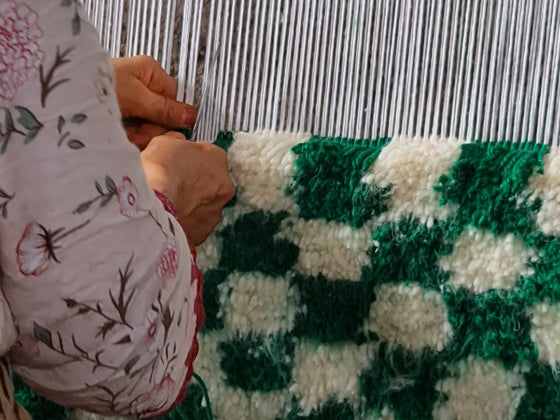
➜ A good hand-knotted short-pile rug tends to hold its structure and presence better over time than a very soft or long-pile rug. The knot creates a more compact surface, better able to withstand chair movement and repeated pressure.
➜ It is still important to choose a quality rug, vacuum it regularly and act quickly in case of stains.
Wool should not be intimidating: it is a resistant natural fibre, used for centuries to make rugs meant for everyday life. Of course, it needs to be treated correctly in case of stains.
A good alternative to a new short-pile rug can be a vintage rug. It often already has a naturally lower, slightly “flattened” pile from years of use, and adds a warmer, more lived-in character to the room.
Medium-long pile: beautiful, but more demanding
Long pile is beautiful, and we know it well. In a bedroom, in front of the sofa or in a study, it can create a feeling of softness and comfort that is hard to achieve with other rugs.
➜ Under the dining table, it requires more attention. Chair legs can press down on the pile in the same spots over and over, creating more visible marks over time.
➜ Crumbs fall deeper into the pile and the vacuum cleaner may struggle to remove them completely.
➜ Stains can penetrate deeper into the fibre.
This does not mean that a long-pile rug is “forbidden” under the table. It simply means choosing it knowing that it will be more demanding to manage.
Wool: why it should not scare you in the dining room
When talking about a rug under the dining table, a synthetic rug can seem like the most practical solution, especially because of the price or the idea of easier maintenance. But it is not automatically more suitable: much depends on the quality of the fibre, the construction of the rug and how long you want it to live in your home.
For us, wool remains one of the most sensible choices. It has good resistance to use, a material presence that warms the space, and, if you act quickly, it allows many surface stains to be managed more easily than you might imagine.
Wool should not be treated as a fragile material, but as a uniquely durable natural fibre. What makes the difference is the quality of the rug, the type of weave, the pile height and how quickly you intervene when accidents happen.
If you want to learn more about materials, techniques and care, you can also read our guide to wool rugs.
Boucherouite: the rag rug made to take everyday life

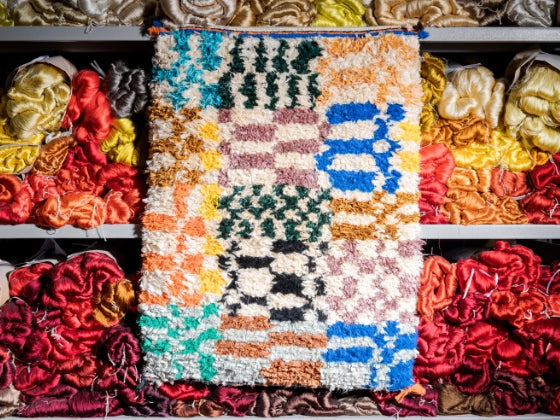
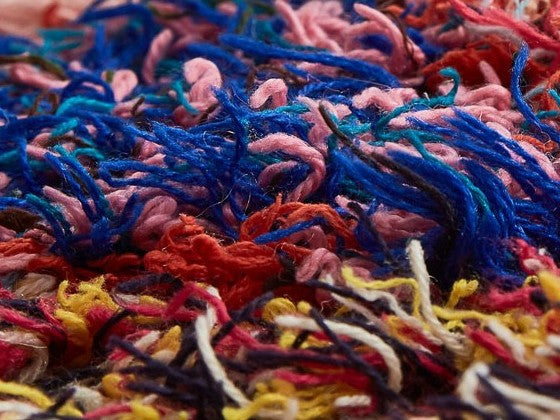
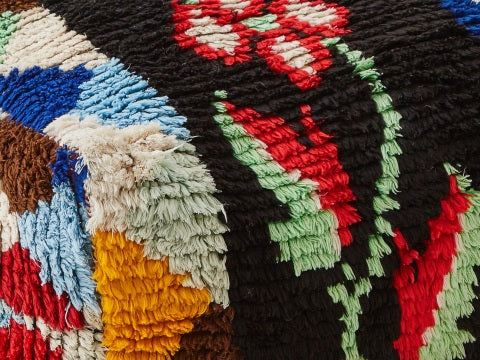
A Boucherouite is a Moroccan rug made from recycled textiles: fabric scraps, old clothes, reclaimed yarns. It is not a wool rug, but it can be an interesting solution for lived-in areas that are informal, colourful and full of movement.
Aesthetically, it has a personality that is hard to find in other types of rug: irregular textures, vivid colours, spontaneous patterns, a freer and less composed energy.
Under a dining table, it can work, but with one important note: Boucherouite rugs are more often found in small or medium sizes. If you have a large table, finding the right size may be difficult. If you have a compact dining area, a round table or a more informal convivial corner, it can be a choice full of character.
Saharan mats and Hassira

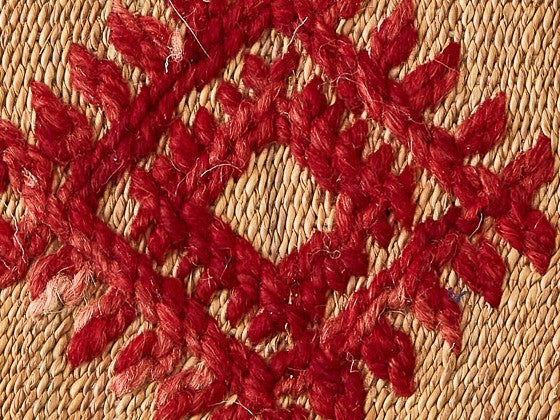
Saharan palm-wood mats and Moroccan Hassira palm-straw mats are natural, tactile pieces that can give the dining area a very distinctive identity.
They can work under a dining table, but they need to be considered more carefully than a wool rug. The first thing to look at is the design: many mats have motifs that are best appreciated from above, but under a table part of the pattern will be covered by the tabletop and chairs. A glass table will create a very different effect from a solid wooden one.
The second aspect is care. Saharan mats are precious handmade pieces: frequent contact with food and liquids is a risk to consider. Straw mats are more practical, but they need to be shaken out to be cleaned, or vacuumed at low power with the brush function switched off. In short, maintenance is more demanding than with wool and other materials.
In short: yes to mats under the dining table, but with your eyes open about how much of the design will remain visible and how much care they will require. When in doubt, it is better to ask for advice first: a visual preview can help avoid the wrong purchase.
You can start from our selection of Saharan mats and palm-straw rugs.
Which rugs to avoid under the table
There are beautiful rugs that are simply not suited to the dining area. Not because they are “wrong”, but because their material or construction does not cope well with chairs, stains and heavy use.
➜ Viscose and sabra, for example, often have a beautiful, almost silky sheen. But they are delicate materials: they can flatten easily, suffer from moisture and become stained in ways that are hard to recover. Better to reserve them for less trafficked rooms, away from tables and chairs.
➜ Also be careful with tufted rugs with rubber or latex backing. Over time, especially on parquet or delicate floors, the backing can degrade, stick to the surface and leave residue that is difficult to remove. If you need stability, it is better to use a separate, thin, removable rug pad suitable for your type of floor.
➜ Finally, if you have small children, pets or use the table every day, think carefully before choosing very pale and uniform rugs. A cream rug can be beautiful, but in a dining area every small stain will be more visible. Busy patterns, shaded colours, abrash, geometric designs and mélange grounds help you live with the rug more calmly.
The most common mistakes
- Choosing a rug that is too small. This is by far the most common mistake: in a shop or online, the rug seems large enough, but once placed with the chairs in their real area of movement, its limits become clear.
- Choosing a rug with too much pile without considering cleaning, crumbs and the marks left by chairs. It can be a style choice, but it needs to be a conscious one.
- Forgetting the extendable table. If the table is opened often, the rug should be assessed based on the size actually used in daily life, not just on the more compact version.
- Ignoring doors, passageways and nearby furniture. A rug that is too large, if it invades a passage area or comes too close to a door, can become awkward even if it is technically “correct”.
- Choosing a rug disconnected from the style of the room, perhaps only because it seems more “practical”. A rug under the table is very visible: it needs to speak to the floor, chairs, lamp, materials and colours of the room. It does not have to “match” everything, but it should feel like part of the same story.
Rugs for the dining table: our final advice
For a dining area used every day, flatweave rugs remain among the most sensible choices. Among Moroccan pieces, Akhnif, Zanafi and Kharita rugs — made in the Taznakht area — offer strong geometric patterns and a graphic presence that can enrich the room without weighing it down, while also helping to disguise small stains.
If you are looking for more softness, a short-pile rug can also work well, as long as you are willing to give it a little more daily care.
Wood or straw mats can give the dining area a very tactile personality. They should, however, be considered more carefully, especially if the table is used every day or if the risk of stains is high.
One final piece of advice, whatever rug you choose: if you are worried about stains and small accidents, go for mixed colours, graphic patterns, shaded grounds or surfaces with many chromatic variations. A stain will be far less noticeable on a rug with a busy design than on a pale, uniform ground.
If you are approaching this kind of purchase, tell us about your dining area: the size of the table, the type of chairs, the floor, how often you host, how much that moment of the day is part of your life. From there, it will be easier to understand what works for you: flatweave, short pile, plant fibres, or perhaps none of these.
The right rug is not just the most beautiful one: it is the one that can enter your home without complicating it.
FAQ - Frequently asked questions
How far should the rug extend beyond the dining table?
The rug should extend at least 60-70 cm beyond each side of the table. If the chairs are large, deep or have arms, 80 cm is better. The practical rule is this: when someone gets up, all the chair legs should remain on the rug.
What is the best material for a rug under the dining table?
For us, wool is one of the most sensible choices, especially if the rug is flatwoven or short-pile. It is a natural fibre, resistant to use and suitable for everyday life, as long as you act quickly in case of stains.
What size rug do I need for a 160 × 90 cm table?
For a 160 × 90 cm table, the rug should measure around 280-300 × 210-230 cm. The exact size depends on the depth of the chairs and the space available around the table. Before buying, it is always worth testing the layout with the chairs pulled back.
Can I put a round rug under a rectangular table?
Yes, but it is a choice to consider carefully. The round rug must be large enough to contain the chairs when they are moved. It works best in spacious rooms, where the contrast between a rectangular table and a round rug feels intentional rather than accidental.
How do you clean a rug under the dining table?
The best routine is to vacuum crumbs and dust regularly and act immediately on fresh stains, blotting rather than rubbing. Flatweave rugs are easier to manage because they have no pile; short-pile rugs require a little more care, but remain a good option if they are compact and well made.
Can rubber backing damage parquet flooring?
Over time, it can happen, especially where the table legs rest. Some rubber or latex backings can stick to parquet, leave residue or create marks that are difficult to remove. It is better to use a separate, thin, removable rug pad chosen according to the type of floor. Our artisan rugs never have a rubber backing or any other synthetic backing material.
Is a light or colourful rug better under the table?
It depends on the style of the room and the level of maintenance you are willing to accept. Light rugs are bright and refined, but they show stains and marks more easily. Graphic patterns, shaded colours and mélange grounds are often more forgiving in everyday life.