
A guide to new trends and Moroccan designers who are rewriting the rules.
There are styles that survive fashions because, more than passing "trends," they are timeless design languages.
Moroccan style is one of these: full of rhythm, light, and texture, but often reduced - alas - to a catalogue of lanterns, poufs, geometric tiles, and "ethnic" furnishings (if you've read our previous posts, you know we don't like this word, which is so inconsistent).
Yet the true charm of Moroccan interiors lies not in the decoration, but in the way in which space, light and materials interact with each other.
In this article we try to let you enter "our" homes, to tell you how to bring that code into today's European and American homes, without stumbling into artificial folklore.
From traditional grammar — made of tadelakt, zellige, and geometric proportions — to the contemporary language of Moroccan designers who are rewriting the rules.
And, of course, we'll see how to translate it room by room, with rugs, upholstery, and colours that also work in our spaces.
What we really mean by “Moroccan style”

When we talk about Moroccan style, our minds turn to openwork lanterns, colourful fabrics, and a touristy riad atmosphere.
Let’s be clear about one thing: Moroccan style is not so much a decorative theme, but a complex architectural language.
It was born from the encounter between Arab, Berber, and Andalusian cultures, and has evolved over the centuries by intertwining Islamic, Art Deco, and colonial influences.
It is recognized by certain recurring features: internal courtyards that gather light and become the heart of the home, arches that articulate the space, stucco and zellige that create perfect geometries, carved wood that filters shadows and reflections. On the outside, the facades often remain discreet. All the character is revealed within, in that constant balance between solids and voids, between light and matter.
In original Moroccan-style architecture, each element has a specific function: zellige tiles are part of a structural design (even though we tend to consider them a decorative element); tadelakt plaster is an ancient technique, capable of making surfaces alive and impervious; niches and arches create proportion and depth. It's not about combining objects or patterns to evoke an atmosphere, but about understanding a coherent spatial system in order to consciously recreate it.
And this is precisely where the difference between a Moroccan-style home and an “ethnic” or “boho” home comes into play: in the first case we are talking about architecture, in the second about scenographic decor (which, if exaggerated, can appear like a forced caricature).
Understanding this distinction is the first step to reinterpreting the Moroccan code in a contemporary way, coherently and without clichés.
What traditional Moroccan interiors look like

To understand contemporary Moroccan style, we must first consider the context. Traditional Moroccan interiors are spaces constructed according to precise logic: proportions, light, and materials.
Types of space
The best-known model is the riad, a house organized around a central courtyard. It's here that light enters, air flows, and domestic life unfolds. From the homes of the medina to the simplest patio houses, everything revolves around that inhabited void, often shaded by orange trees beneath which fountains gurgle.
Even the sitting rooms reflect this structure: low, perimeter seating, designed for conversation rather than entertainment. The interior and exterior are in constant dialogue, separated by arches or porticos that filter light rather than enclose spaces.
Traditional materials and tiles

Everything is designed to last and breathe.
Tadelakt lime plaster, with its compact, seamless, shiny and velvety-looking finish, waterproofs bathrooms and walls.
The zelliges, small glazed terracotta mosaic tiles, create infinite geometries.
Bejmat coverings, with a rougher and more robust surface, are intended for floors and patios.
Carved and inlaid wood, wool, leather and woven straw add tactile warmth.
The hammered metals —copper, brass, iron—reflect the light and reveal the artisanal origins of every detail.
Traditional furnishings, rugs and textiles

In traditional furnishings , proportions are low, soft, and convivial : sofas and chairs run along the walls, central tables, and ottomans complete the room. Moroccan-style furniture isn't designed to "fill" but to complement the space, with clean lines and natural materials.
Lamps, lanterns, and chandeliers in perforated metal create plays of light, while Moroccan-style mirrors, with carved or chiseled brass frames, amplify the space and reflect the warm light of the interiors.
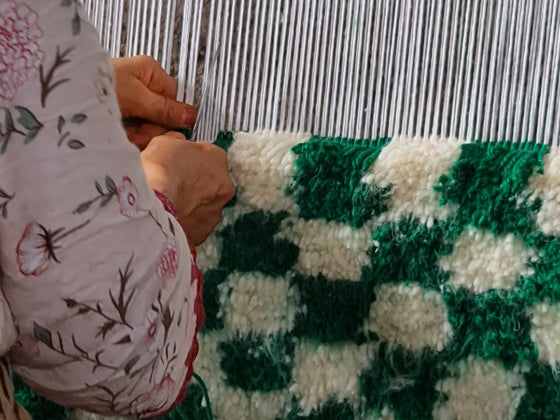
And then there are our beloved Moroccan rugs, the true stars of the home. Berber rugs, with their irregular weaves and natural colours, define the centre of the room and tell stories of everyday life. (Refresher? You can read: "What are Moroccan rugs called: the complete guide").
Contemporary Moroccan style: the new interiors
So far, we've seen the basics: shapes, materials, proportions. But how does all this translate today, when we talk about contemporary Moroccan style?
Over the past twenty years, Moroccan architects and designers have been rewriting the traditional code with a more minimalist language, sometimes closer to mainstream European, American, and international tastes, but still rooted in the region and their background.

Tradition isn't rejected; it's rethought and adapted to the tastes and needs of modern living. In some cases, the superfluous is removed to let light, volumes, and textures speak for themselves.
This is an evolving style that was born and continues to develop in large international cities such as Marrakech or Tangier: a ferment that leads us to think of the birth of a real trend.
A language that mixes minimalism and maximalism
The new Moroccan style is born precisely from the comparison between tradition and contemporaneity.
Today's designers are rewriting the classic grammar with light lime surfaces, neutral palettes, and a few saturated touches: a Majorelle blue (if that doesn't ring a bell, you absolutely must read this post on Moroccan rugs in 20th-century architecture ), a palm green, a rust that warms without being invasive.
The architecture becomes more essential, the volumes open up and breathe.
The decorations give way to the materials: pale tadelakt walls, matte beige floors, natural wood, oxidized or polished metals. It's a seemingly more minimalist language, but far from cold, where light continues to dominate and every texture evokes artisanal craftsmanship.

In other words: contemporary Moroccan style has become a sophisticated idea of living that has found its most stimulating laboratory in the Red City.
Inspiration | Iconic Places of Contemporary Marrakech

It is no coincidence that Marrakech has become a true capital of contemporary design.
If only medinas and souks come to mind when you think of Marrakech, think again: this splendid city is also a contemporary laboratory where Moroccan tradition is elegantly reinterpreted. Among the places we love as practical examples of this "modern Moroccan" are:
Riad Yima by Hassan Hajjaj: not a riad, but a living work of art. Moroccan artist and photographer Hassan Hajjaj has made a significant impact with his boutique art gallery project, Riad Yima. A mix of neon colours, traditional motifs, and reinterpreted luxury brands, it has helped redefine the local creative scene. Home, gallery, atelier, exhibition space: every corner reflects Hajjaj's colourful pop taste, yet nestled within an authentic architectural setting.
MACAAL (Museum of African Contemporary Art Al Maaden): A contemporary art museum (the largest in Morocco) with spacious galleries, bright atriums, local materials, and an impressive collection of over 2,000 works of art; a strong signal that Morocco is looking forward and celebrating its modern creativity.
Nomad: a restaurant in the heart of the medina, with an elegant terrace overlooking the old city. The design is clean and contemporary, yet rooted in its roots: a perfect example of how gastronomy, light, craftsmanship, and hospitality can interact in a sophisticated way.
Riad Rosemary: Carefully restored by LRNCE, this riad blends handmade ceramics, artisanal zellige tiles, and vintage furnishings in a design that blends Moroccan craftsmanship with a contemporary sensibility. Every detail—floors, fabrics, materials—reveals a culture lived with elegance.
Plus61 in Guéliz: a creative café/space in the modern part of Marrakech, with minimalist yet warm interiors, clean lines, natural palettes, and local materials. A perfect example of how contemporary Moroccan style can dialogue with refined international design.
Worth watching: Concept stores like 33 Rue Majorelle, as well as many designer restaurants and hotels, reinterpret local craftsmanship in a modern way and help give impetus to a “contemporary Moroccan” language.
Moroccan style in the kitchen
In the kitchen, materials take centre stage and decoration becomes a measured accent. Start with a calm base: limewashed walls or textured plaster, natural wood (even dark, if the space can handle it), satin-finish metals, and a warm neutral palette—sand, ivory and terracotta. Then introduce one well-designed focal point: a zellige backsplash in tone-on-tone shades or a single-colour field (deep green, petrol blue, milky white), or herringbone-laid bejmat tiles. If you like, finish with a few artisanal details—trays, handmade tajines, a ceramic or terracotta lamp, a glazed bowl. Let the lighting do the rest: warm, soft, never overly clinical.
If you prefer a more traditional or boho take, you can push it a little further without losing coherence—especially in a classic home (for instance, a country-style kitchen with shaker-style framed doors). A colourful zellige mosaic backsplash with bolder geometries can become the visual heart of the room. The trick is simple: let that surface do the talking, and keep everything else more understated. The result is a kitchen with character—warm and authentic.

Did you imagine this side of Morocco?
10 Moroccan designers who are rewriting tradition
We can't talk about design or style without thinking about the protagonists of this transformation: designers and architecture firms who have embodied the spirit of Moroccan style, reinterpreting it in a contemporary way and embracing other transversal trends. Here you'll find the main ones (and some of our favorites!).
Younes Duret
www.younesduret.com
A French-Moroccan designer trained in Paris, Younes Duret is among the product designers who best embody the new Moroccan style. With his celebrated Zelli bookcase, inspired by the geometric patterns of zellige, he transformed decoration into structure: a pattern that becomes architecture, clean and contemporary. This same homage is echoed in ZelliFood, a collection of appetizer plates created with two-Michelin-starred chef Fabrice Vullin. The result is an object the designer calls "inducraft," in which the traditional zellige is projected in 3D and takes on a new function.
His language is minimal yet rooted in tradition. In his interiors, the most authentic and spontaneous Berber rug finds its natural place—not as an ethnic accent, but as a material backdrop that engages with the space. Duret demonstrates that reinterpreting Moroccan tradition doesn't mean adding ornamentation, but rather subtracting until the balance between sign and silence is restored, with just the right amount of humor and joy (as demonstrated by his multicolored Camely sculptures inspired by Eero Aarnio's Puppy for Magis).
Ali Lahlou
www.alilahlou.com
There's something profoundly tactile about Ali Lahlou's approach to space. She doesn't design interiors, she sculpts them: compact masses, velvety surfaces, clean cuts that let the light breathe. The legacy of Moroccan Art Deco can be read between the lines—in the dark woods, the symmetrical geometries, the glints of brass—but filtered through a contemporary rigor that strips away, measures, and polishes.
His homes seem to speak softly: no unnecessary decorations, just vibrant matter. A deep lime wall, a matte floor, a volume that curves in just the right place. In spaces like this, even the rug has a different role: it doesn't colour, it provides structure. A dense Beni Ouarain or a graphic kilim are enough to break the static and restore humanity to the surfaces.
More than an interior designer, Lahlou is a craftsman of spaces. And his interpretation of Moroccan style reminds us that the power of design lies not in added details, but in what we choose to leave bare.
Hamza Rachad
www.studiorachad.com
There are interiors that strike you with their silence and, at the same time, their memory. Hamza Rachad's are like that for us. Clean volumes, pure lines, materials you can touch before you even look at them. But behind the formal purity lies a world of references: craftsmanship, local techniques, living surfaces.
Each project begins with a few select elements—a limewashed wall, a wood grain, a raw fabric—that take centre stage without ever overpowering. The custom-made pieces are crafted by Moroccan hands, with the care that still makes the difference between a designed interior and a truly lived-in one.
His language is contemporary, but not Westernized. No exotic settings, no showroom minimalism: just authentic spaces, where tradition remains discernible even when reduced to a nuance, a shadow on the wall.
And it is here that the connection with Moroccan rugs returns—the authentic, irregular ones, which breathe within the space rather than dominate it. In Rachad's designs, a rug is not decoration but pause, ground, root. Perhaps this is the point: not to "take Morocco elsewhere," but to put it back at the centre, with today's words and materials.
Youssef Benhamou
benhamoustudio
Based in Casablanca and trained in interior architecture, Youssef Benhamou founded his studio with the idea of interpreting the Moroccan language through a contemporary aesthetic that remains recognizable. In a project like this villa on the outskirts of Casablanca, Benhamou reflects on the standardization of residential spaces and proposes a home "with soul": metal screens, semi-solid herringbone wood, concrete-effect walls—yet the result is not cold, because the materials are warm, the proportions fluid, and the local identity remains instantly perceptible.
In his work, the reference to tradition isn't conveyed through visually obvious folkloristic elements, but through a layering of textures, light, and proportions: the furnishings don't scream Moroccan, but "think" Moroccan. This approach makes them a perfect example for our discussion of rugs, textures, and upholstery: a Moroccan-style rug is no longer a purely decorative element, but becomes an integral part of the space in which Benhamou works—a backdrop, a material foundation, a bridge between matter and form.
In short: Youssef Benhamou shows that furnishing in Moroccan style today means choosing materials, light and balance, rather than obvious “ethnic” patterns.
Fatima Zahra Akhamal
akhamal_archi
Fatima Zahra Akhamal belongs to a generation of designers who manage to transform Moroccan craftsmanship into a contemporary language without ever domesticating it. In her projects for Corpus Design, surfaces breathe: soft woods, textured limestones, hand-molded ceramics. There's nothing theatrical, yet everything has presence. It's a balanced, almost meditative approach, which places tactility before form.
Her training in Morocco and Belgium is evident in her meticulous attention to detail and her desire to experiment with materials, but the heart of her work remains profoundly local. She works with artisans from Rabat and Casablanca, crafting unique objects and designing interiors that seem born from a spontaneous balance between tradition and research. No nostalgia, no folklore: just a different way of listening to Moroccan heritage and bringing it to life through texture, light, and proportion.
In spaces like these, rugs don't just add an ethnic touch, but rather become part of the room's overall feel. A thick, velvety Mrirt, a soft Beni Ourain, even a kilim with more graphic patterns: each rug finds its place because it interacts with the living material of her designs. The result is interiors that embody Moroccan style, in a pared-down, warm, and nuanced way.
Soufiane Aissouni
www.amnaydesign.com
The work of Soufiane Aissouni (one of our favorites!) seems to be born from a dual sensibility: that of a designer and that of a set designer. Her interiors always convey a sense of "story," but never theatrically staged. She favors molded surfaces, sculpted walls, and beams of light that transform a room's character without resorting to superfluous decoration.
Aissouni works with materials even before objects: light tadelakt, raphia, natural wood, hand-treated metal. His lamps and furnishings resemble small architectural elements, designed with the same care as a volume. His aesthetic is clean, but not minimalist: it always retains an underlying warmth, a softness of colour, that slow pace typical of Moroccan homes.
In her spaces, a Berber rug functions almost like a connecting element: it holds the surfaces together, adds depth, and softens the geometric lines. It's not an "accent" or an exotic reference, but a living piece that interacts with the tadelakt walls and the natural textures she loves to use.
Hind Magoul
hindmagoulinteriors
Hind Magoul creates quiet, almost gallery-like interiors: clean surfaces, soft palettes, and carefully calibrated details that allow the space to breathe. Moroccan references are present, but they are meticulously measured—a blade of light that traces an arch, a block of local marble, a single handcrafted piece chosen as a focal point.
Her style demonstrates how tradition can coexist with a soft, contemporary aesthetic: no clutter, no drama, just authentic materials and measured proportions. In such spaces, even the rug becomes a quiet presence—a full-bodied Mrirt or a minimal Beni Ourain—that adds depth without interrupting the room's calm.
Ibrahim Mouhib
mouhibdesign
Ibrahim Mouhib lives between Marrakech and Mexico, and this duality is immediately evident in his interiors: tactile surfaces, earthy colours, and light that sculpts spaces in an almost sensorial way. He revisits iconic materials like zellige and tadelakt, but uses them with a discreet and contemporary language, integrating them with clean volumes and natural palettes.
In his projects—from Moroccan villas to homes on the Pacific—Moroccan rugs become the perfect bridge between cultures: they work equally well in a riad as in a minimalist home, bringing warmth and depth without overdoing the style. Mouhib effortlessly demonstrates how Moroccan codes can thrive in global contexts, remaining authentic and surprisingly contemporary.
Kaltoum Dumonceau | Bayt Kalthoum
baytkalthoum
Kaltoum Dumonceau is an interior designer we follow with great pleasure: her curatorial work brings together interiors, details, and objects from Moroccan tradition with a highly contemporary eye. It's neither a nostalgic archive nor a "folkloric" profile: it's a way of narrating Morocco through authentic fragments—real environments, lived-in materials, geometries, rugs, carved doors, wooden ceilings—that showcase the beauty of everyday life.
She works in Dubai, where she also founded a homeware brand, Bayt Kalthoum Home (Bayt Kalthoum is also the name of her Instagram profile, where she posts her interior design projects). Kalthoum's strength lies precisely in her careful selection: every image has a story, every detail speaks of a living material heritage. For those of us who work with Moroccan rugs and interior design, it is a constant source of inspiration: a reminder of how powerful tradition is when it is not domesticated or simplified, but rather allowed to speak with its own voice.
Hicham Lahlou
www.hichamlahlou.com
We purposely left Hicham Lahlou for last: not only because he is a central figure in contemporary Moroccan design, but because he represents exactly what we are trying to convey in this article—a tradition that can become international without losing its depth.
Born in Rabat in 1973 and educated in Paris, Lahlou has built a solid and versatile career over nearly thirty years: interior designer, creative, artist, and designer of objects and public spaces. His style is elegant and contemporary, yet always rooted in Moroccan cultural references, reinterpreted with great restraint.
His best-known works include collaborations with international brands, special projects for design firms, works exhibited in museums such as the Vitra Design Museum and the Guggenheim Bilbao, and large-scale projects such as the interior design of Morocco's high-speed rail stations. He is one of the few Moroccan designers to also be recognized as a cultural activist: he founded the Africa Design Award & Days and holds institutional roles in the World Design Organization.
Lahlou's strength lies in his ability to treat design as a language of identity. His forms are clean and contemporary, yet the connection to Morocco is always there, in a detail, a proportion, a material used with respect. His projects demonstrate how powerful tradition can be when not imitated, but intelligently reinterpreted.
For those of us who work with materials, textures, and objects, Hicham Lahlou is a point of reference: proof that Moroccan design can be sophisticated, global, and deeply rooted at the same time.
Architects and architectural firms
If designers and artisans are rewriting the language of Moroccan interiors, architecture firms are no exception: they are the ones shaping the volumes, light, and materials that define the identity of new Moroccan homes.
Here we have collected some names that demonstrate how tradition can transform into contemporary architecture without losing authenticity.
Studio KO
www.studioko.fr
Studio KO (founded by Karl Fournier and Olivier Marty) is helping redefine the imagery of contemporary Moroccan architecture. The Musée Yves Saint Laurent in Marrakech is their signature project: monolithic volumes, bricks sculpted by light, surfaces that resemble compressed earth. Their strength lies in their simplicity: clean geometries, local materials, a spare yet sensitive way of embracing the landscape. Studio KO demonstrates that tradition can be evoked without overtly quoting it: all it takes is a mineral texture, a precise curve, a touch of shadow. It's a lesson in elegance that resonates beautifully with our discussion of "non-folkloristic" Moroccan style.
Aziza Chaouni
www.azizachaouniprojects.com
Aziza Chaouni is one of the most interesting figures on the Moroccan architectural scene, working where few dare to touch: heritage. Her renovation project for the modernist Sidi Harazem baths in Fez—now considered a model of responsible restoration—demonstrates a profoundly respectful yet innovative approach. Her work combines sustainability, traditional techniques, and research into materials, moving from raw earth to low-impact construction processes.
Chaouni has also brought her vision to the international stage: she was invited to the Venice Architecture Biennale, where she contributed projects that looked to the future while drawing on memory. She also built an earthquake-resistant house in Morocco, designed with rammed earth, combining structural safety with traditional materials—a powerful example of how to create contemporary architecture rooted in the local area.
She is one of the professionals who best embodies the idea of continuity between past and future: her contemporary architecture doesn't forget memory, but transforms it into the foundation for a forward-looking home. For an article on Moroccan style, Aziza Chaouni is a name well worth highlighting.
Studio Cays
www.studiocays.com
Studio Cays represents another line of new Moroccan architecture: the more international one, attentive to pure volumes, climate comfort, and proportions as a narrative tool. Their homes and renovations often feature clean geometries, large openings, tactile surfaces, and a warm yet restrained aesthetic. They are among the practices cited globally as examples of deeply rooted yet exportable contemporary Moroccan architecture. They are perfect for demonstrating how the country's style, once freed from stereotypes, works beautifully even in metropolitan contexts.
Yachar Bouhaya
www.yacharbouhaya.com
Yachar Bouhaya's architecture is recognizable for its lean proportions, natural materials, and a highly restrained approach to working with space. His residences and hotels use light, shadows, partitions, patios, and parapets as true compositional elements. There's always a subtle connection to Moroccan tradition—never overt, never literal—that emerges from a curve, a brickwork, a filtered passageway. The result is elegant, quiet, and profound spaces that perfectly fit the category of contemporary quiet luxury.
Soufiane Doukkali
studiosd_architecture
Soufiane Doukkali works with a warm, sculptural architectural concept: strong volumes, soft curves, natural materials, and a use of white that interacts with light without becoming sterile minimalism. Her projects reveal a continuity with traditional Moroccan techniques—patios, arches, filtered spaces—but translated into more fluid, contemporary forms. She's an architect to watch, demonstrating that Moroccan tradition, when handled with sensitivity, can bring a powerful identity to even the simplest interiors.


How to Bring Moroccan Style to a European or American Home
An important premise: there's nothing wrong with loving the most iconic decor, if chosen carefully and integrated into a project that is in line with its context.
There's nothing wrong with embracing the most iconic and decorative elements, if carefully chosen and incorporated into a coherent design. The point is, Moroccan style can offer so much more.
Let's be clear: bringing Morocco into European, Italian, or American interiors doesn't mean buying two lanterns, a pouf, and some pom-pom pillows. It means working on the underlying grammar of those spaces (the one we discussed at the beginning of this post): material, light, proportions, rhythm.
Below you'll find a list of truly useful elements that work today, in contemporary homes, without slipping into stereotypes.
The aim is a more contemporary and sophisticated reading: a few well-chosen signs, authentic materials and careful proportions, so that even a "Western" home can absorb the “new Morocco” naturally, avoiding anything that feels artificial.
Interior finishes, tiles and coatings
The starting point is always the material: plaster, texture, and light form the foundation. Decoration comes later, as a specific touch, not as a dominant all-over coating.
Tadelakt and lime plasters: they instantly convey that soft, smooth, and slightly lively effect typical of Moroccan architecture. They work well in Moroccan-style bathrooms and kitchens because they create seamless, seamless volumes without visual noise. It's the most natural solution for evoking Moroccan interiors without smearing patterns everywhere.
Bejmat tiles laid in a herringbone pattern: the most contemporary take on one of the most traditional ceramics. Irregular texture, vibrant colour, and graphic design: perfect for both floors and backsplashes, they add rhythm without becoming overly folkloristic.
Zellige in a contemporary key: Zellige can also be used in a very modern way, especially when choosing monochromatic backgrounds, desaturated hues, or tone-on-tone combinations. They work beautifully as a controlled architectural detail: a clean kitchen elevation, a shower niche, a section behind the sink, or a vertical strip that breaks up the continuity of plaster and neutral surfaces. The best effect is achieved when the base remains material and understated, and the ceramic becomes a bright and tactile accent, not an all-encompassing covering.

Why give up colour? These white and pastel zellige tiles paired with hand-painted ceramics by Akhamal Design are an example of a soft and bright contemporary palette. — Credits: akhamal_design Zellige mosaic for a more Moorish accent: if you're looking for a more traditional feel, you can opt for richer and more decorative geometric compositions. This references historical imagery linked to prestigious palaces and architecture, but in a domestic setting, it only works if it remains a well-designed focal point, leaving the rest of the surfaces more subdued.
Patchwork, yes, but with discretion: the "Moroccan-style tile mix" certainly exists, but it must be used with a firm hand: small inserts, perhaps just in a shower alcove or on the front of an island. A hint, a small detail, often speaks louder than a large decorated wall.


💡 Pro Tip | Clay, raw earth, or rammed earth for a more sustainable choice : for those who choose green building and low-impact materials, earth can become an attractive option even in a contemporary context. Today, more technologically advanced solutions exist that increase its resistance and performance: for example, innovative materials composed largely of raw earth with structural and water-repellent properties, useful for reinterpreting this language in a more reliable and long-lasting way.

Furnishings
Proportion matters here. It's not necessary to perfectly replicate the classic Moroccan riad decor (unless you absolutely love it).
Linear and low sofas: that sense of Moroccan hospitality and relaxation comes from the perimeter seating that encourages conviviality, conversation, and sharing. The contemporary version is a low sofa, with soft pillows and clean lines, linear or corner if the room allows.
Coffee tables in wood, stone, or metal: clean lines, natural materials. The shapes can be classic or inspired by an organic, minimalist design. The beauty of a coffee table is that it can be treated as an accent piece, a statement piece, a "sculpture" that shines in its own right. So here, you can dare with an original piece (even better if it's a travel souvenir!) or look for vintage pieces for an eclectic vibe.
Poufs and soft seating: these are a typical feature of Moroccan interior design. Choose an ottoman in natural leather for a traditional look, go for the colourful ones for an unexpected touch, or opt for textured fabrics if you prefer a boho-chic look. You can choose minimalism without excessive embellishments, or traditional Berber patterns, depending on the context in which you want to use them.
Moroccan-style furniture and details, but updated. Carved wood, hammered brass, mirrors with ornate frames: yes, but in moderation and redesigned in a more minimalist style. In any case, we recommend purchasing authentic pieces, preferably directly from artisans and young designers who are increasingly reviving ancient skills with a modern twist.
Rugs and textures

Okay, we're on home soil here, so excuse me if we reiterate that the Moroccan rug is the most powerful element for balancing tradition and modernity. A must-have for decorating a Moroccan-style home, it seems obvious, right?
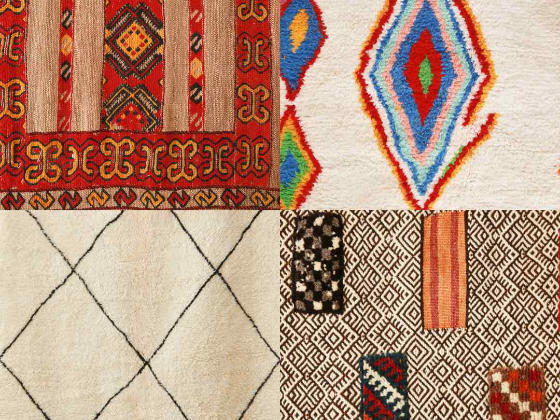
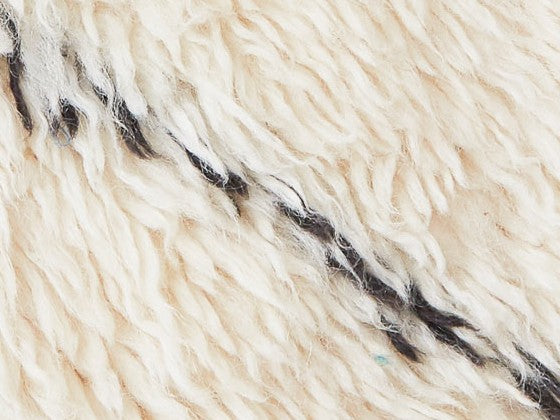
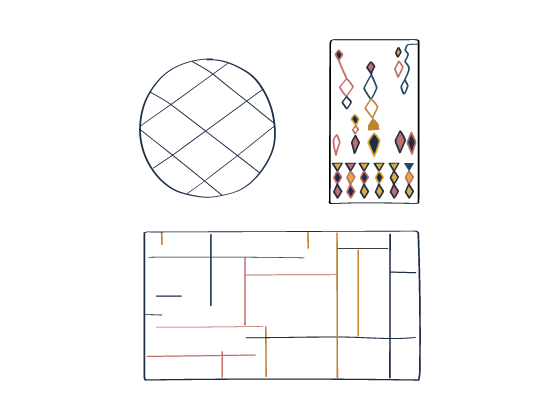
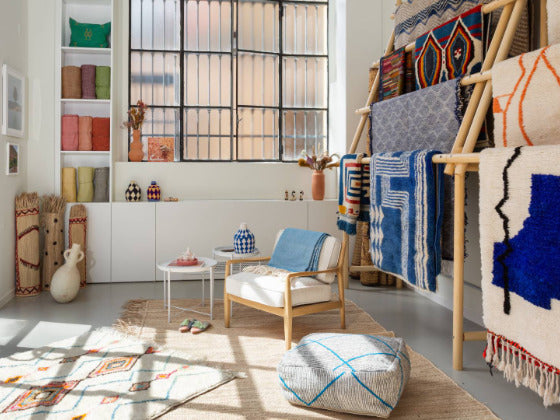
Beni Ouarain and Mrirt as a base: in European/American interiors, they could function as a backdrop. Soft, graphic, luminous. It's the simplest way to evoke Morocco without overstating it.
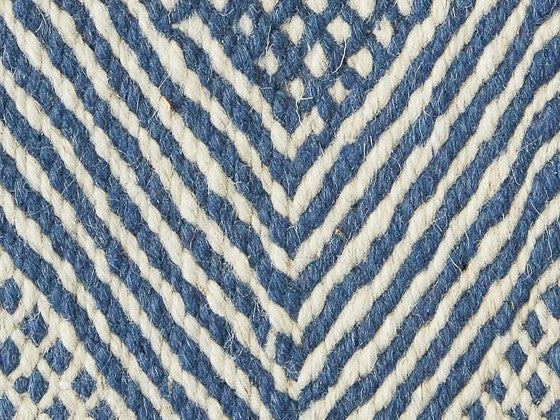
More graphic rugs and layering: a kilim under a Mrirt, or pairings of Amazigh geometric patterns with more neutral textures. Layering is an incredible way to add depth, especially in very clean living and sitting rooms.
The rug should be experienced as a daily sign of identity: in Moroccan homes it is not "a decoration", it is part of daily life, of the way of living.
At this point, we think it would be useful to give you some practical suggestions:
How to Place Rugs in Your Home [With Practical Room-by-Room Examples]
How to choose the colour of the rug and match it room by room
In our shop, you'll always find a selection of Moroccan rugs, hand-picked or created by us in collaboration with the cooperatives and artisans we work with. And of course, we're here to help you choose the perfect one for your home.
Colours
Colour isn't being given up, but we're seeing an evolution in palettes: while the most popular imagery still evokes orange-red-brown mixes with an "ethnic" feel (very trendy between the 1990s and early 2000s), today designers are working with more natural tones—close to native materials—but also with desaturated colours and pop accents, more graphic and contemporary.
Colour remains the protagonist, but it has changed: chromatic explosions are welcome, as demonstrated by the works of Hamza Rachad, Younes Duret, Bayt Kalthoum, and some projects by Studio Cays.
Warm neutrals serve as a base: sand, milky white, clay, and warm ivory create calm, luminous spaces. They're perfect for European and American homes because they pair well with parquet, resin, and modern plaster.
Saturated but controlled accents: Majorelle Blue, palm green, burnt terracotta, or rust. Small doses are enough, on a piece of furniture, a rug, a door, or a niche.
Soft palettes for small spaces, richer ones for larger ones: traditional Moroccan interiors often feature large volumes that "support" intense colours. In a European one-bedroom apartment, however, it's better to keep the basics light and play with accents.
Room by room ideas
All the theory is of little use if, faced with a white bathroom or a standard living room, we don't know where to start. That's why we tried to translate the Moroccan language into concrete choices: materials, palettes, rugs, furnishings.
Not copies, not stage sets, but solutions applicable to a European or American home that wants to breathe Morocco without turning into a tourist set.
Below you will find many room-by-room ideas.
Contemporary Moroccan style bathroom
How do you recreate the enveloping and sensual atmosphere of a Moroccan-style bathroom? Without a doubt, by focusing on the material, which should take centre stage, leaving the decoration almost in the background.
Tadelakt: Traditionally matte, it can also be glossy. It's the ideal base, creating seamless, luminous surfaces, perfect for modern Moroccan-style bathrooms. On the walls or in the shower, it instantly changes the character of the room. Be careful, finding skilled craftsmen to install Tadelakt outside of Morocco isn't always easy! For an ultra-contemporary, minimal look, you can choose dark tones, even black.
Bejmat on the floor or in a niche: on the floor it brings warmth and rhythm; in a shower niche it enhances the space. Depending on the effect you're aiming for, you can use it in a more minimalist style or create a hammam atmosphere for a home spa feel. Ideal colours? Natural hues or richer, deeper tones of olive green, blue/light blue, and terracotta.
Simple faucets: natural brass or matte black pair well with tadelakt and bejmat. We recommend avoiding glossy finishes and sticking with brushed ones.
1–2 strong decorative elements: In the bathroom, you can be daring with a large mirror with an art deco frame, or a lamp—lantern-style or ceramic with a strong artisanal feel—that casts soft light. The rest should remain clean and architectural.
Moroccan style sitting / living room
The contemporary Moroccan-style living room and lounge are relaxed, textured, and well-proportioned. Here's how we imagine it.
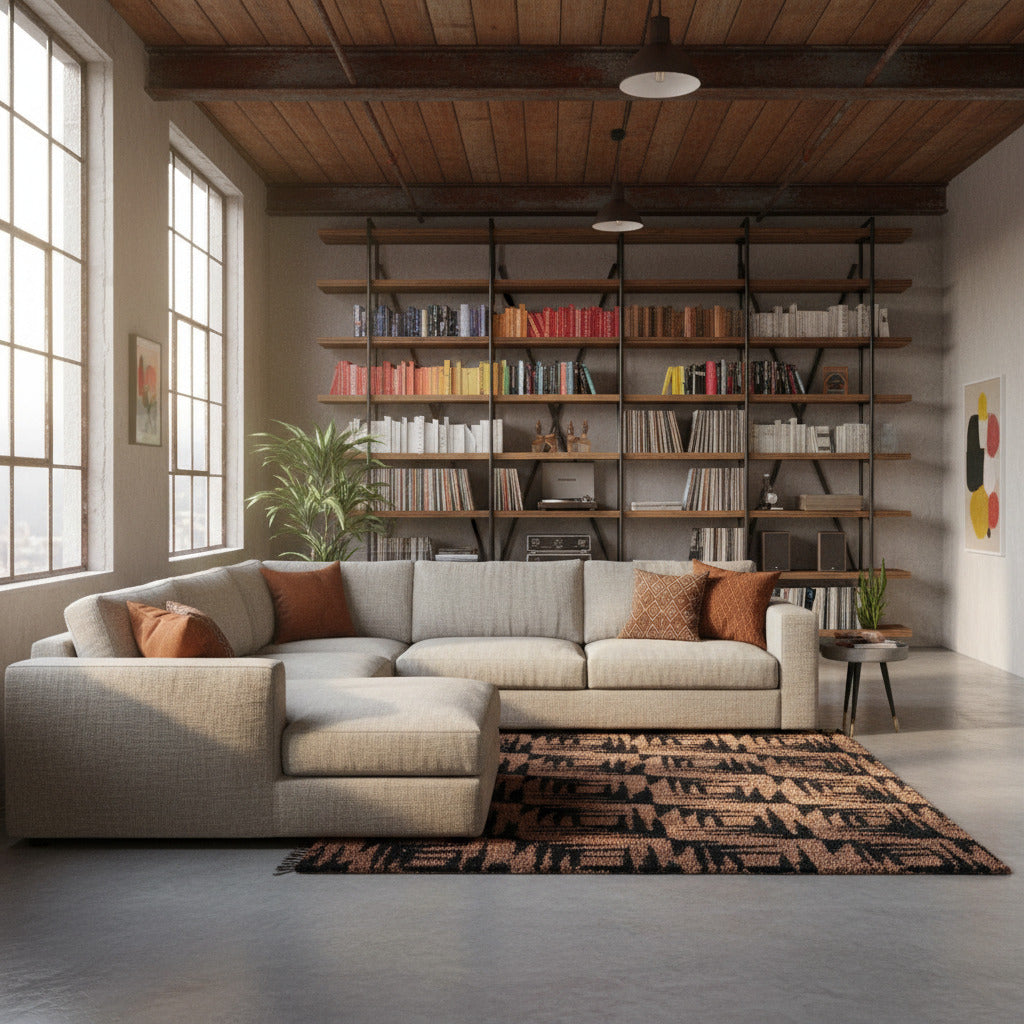
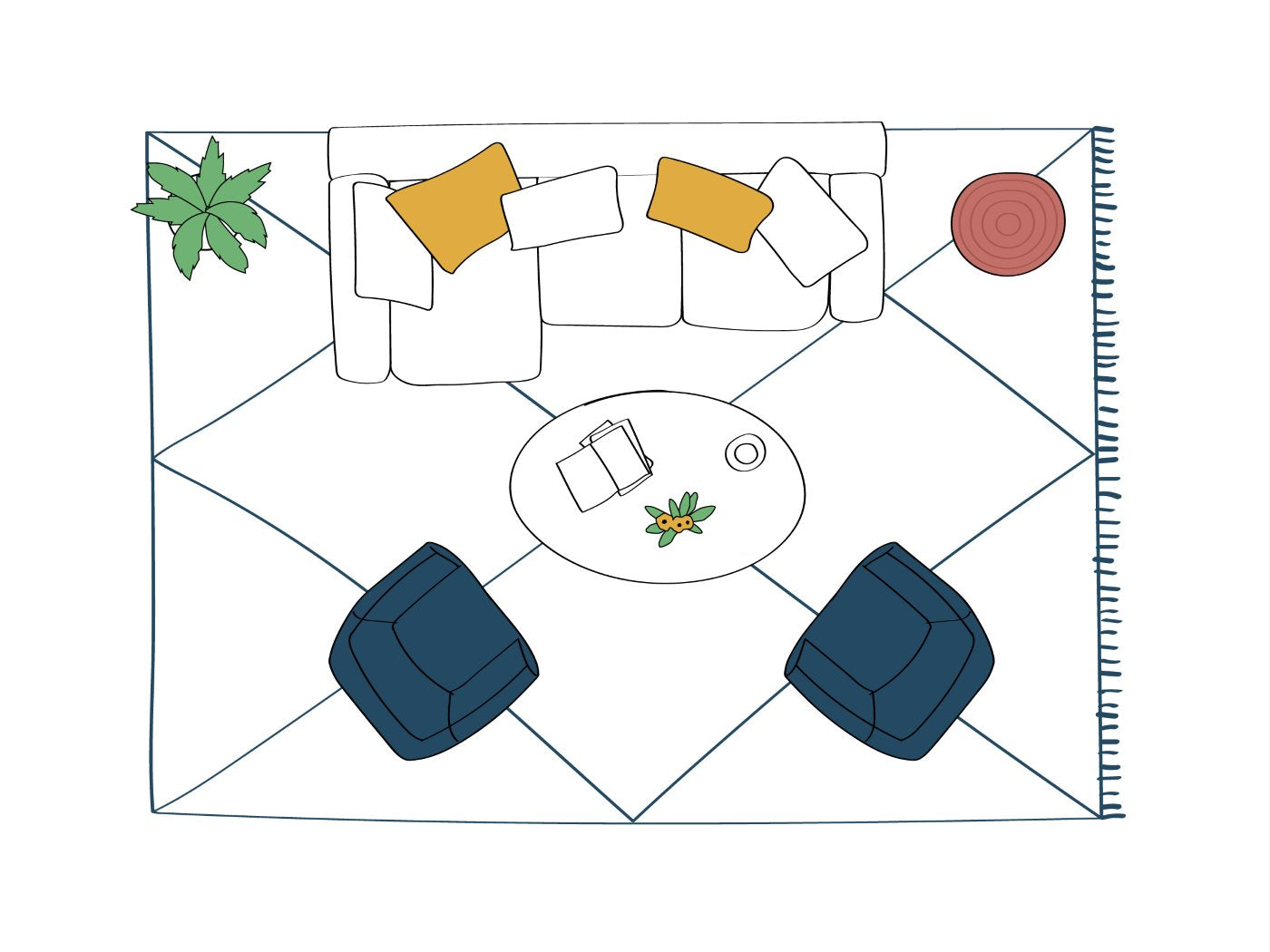
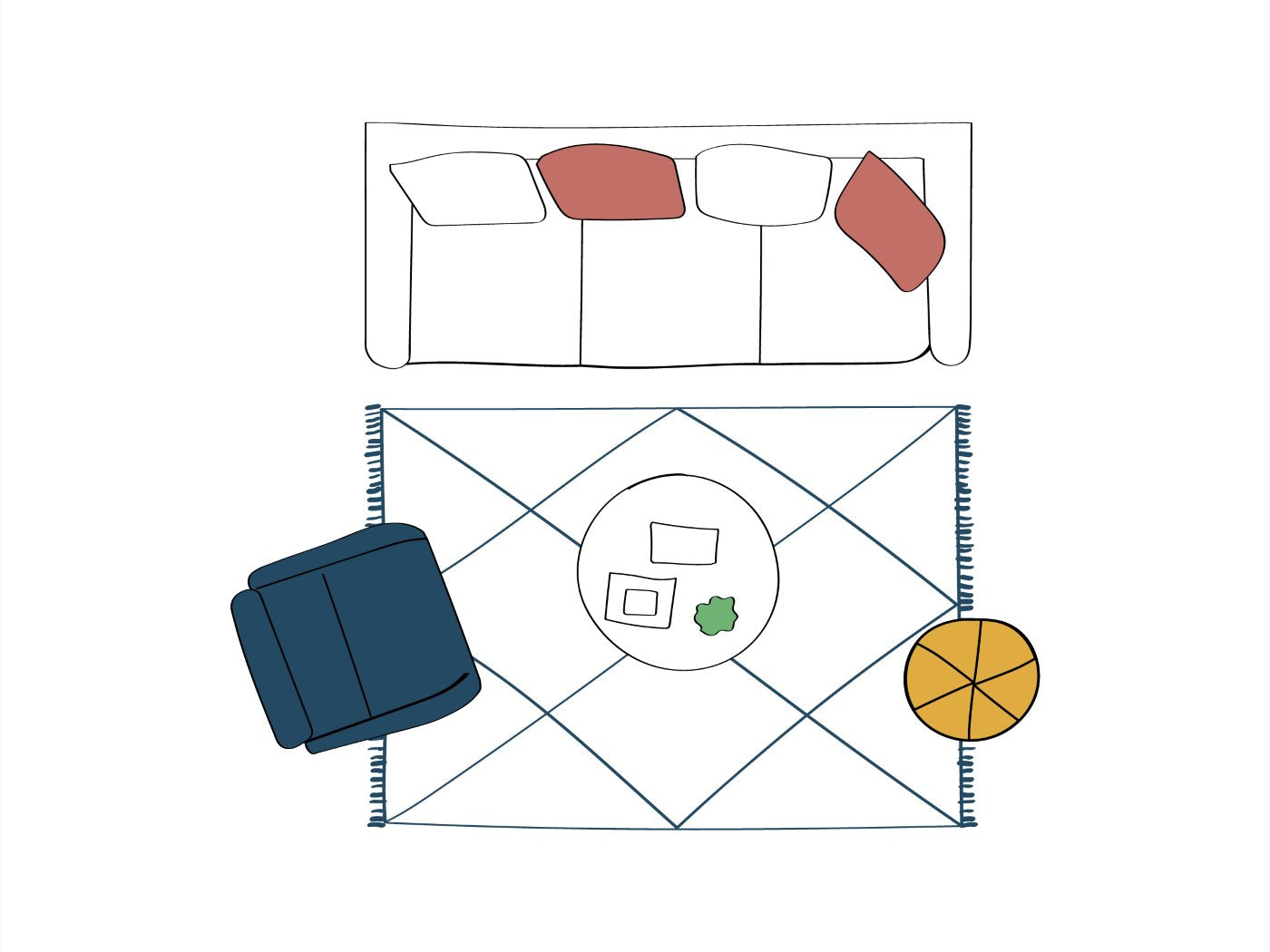
A reinterpreted perimeter seating: an L- or U-shaped sofa with low seats, soft pillows and a matching pouf to recall the Moroccan atmosphere in a modern version.
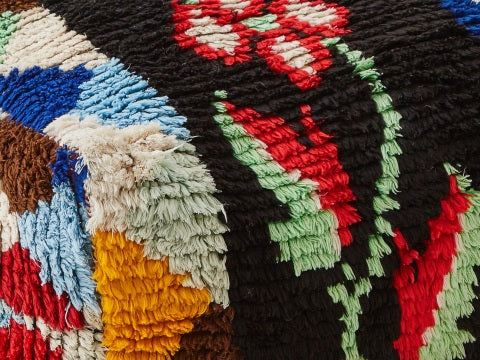
A statement living room rug : it could be a soft Mrirt, a multicolored Azilal, or an iconic Beni Ouarain with a graphic diamond pattern. In a minimalist sitting room, it becomes the centre of gravity of the space.
Filtered and coherent light: lamps inspired by lanterns but revisited with a contemporary twist, or a large single chandelier with perforated or sculptural details ( the ones created by designer Fatima Zahra Akhamal, mentioned above, are beautiful ). Avoid decorative clusters or groups of lanterns: they overwhelm and detract from authenticity, unless you really want to identify a specific thematic area and "overdo" it.
A warm palette, authentic materials: wood, patinated, satin, or sandblasted metal, lime, and natural textiles. Moroccan style works when the surfaces speak for themselves and there's no visual noise, when the materials are authentic, not fake. The authentic artisanal touch is essential.
Infusing Moroccan style in the kitchen
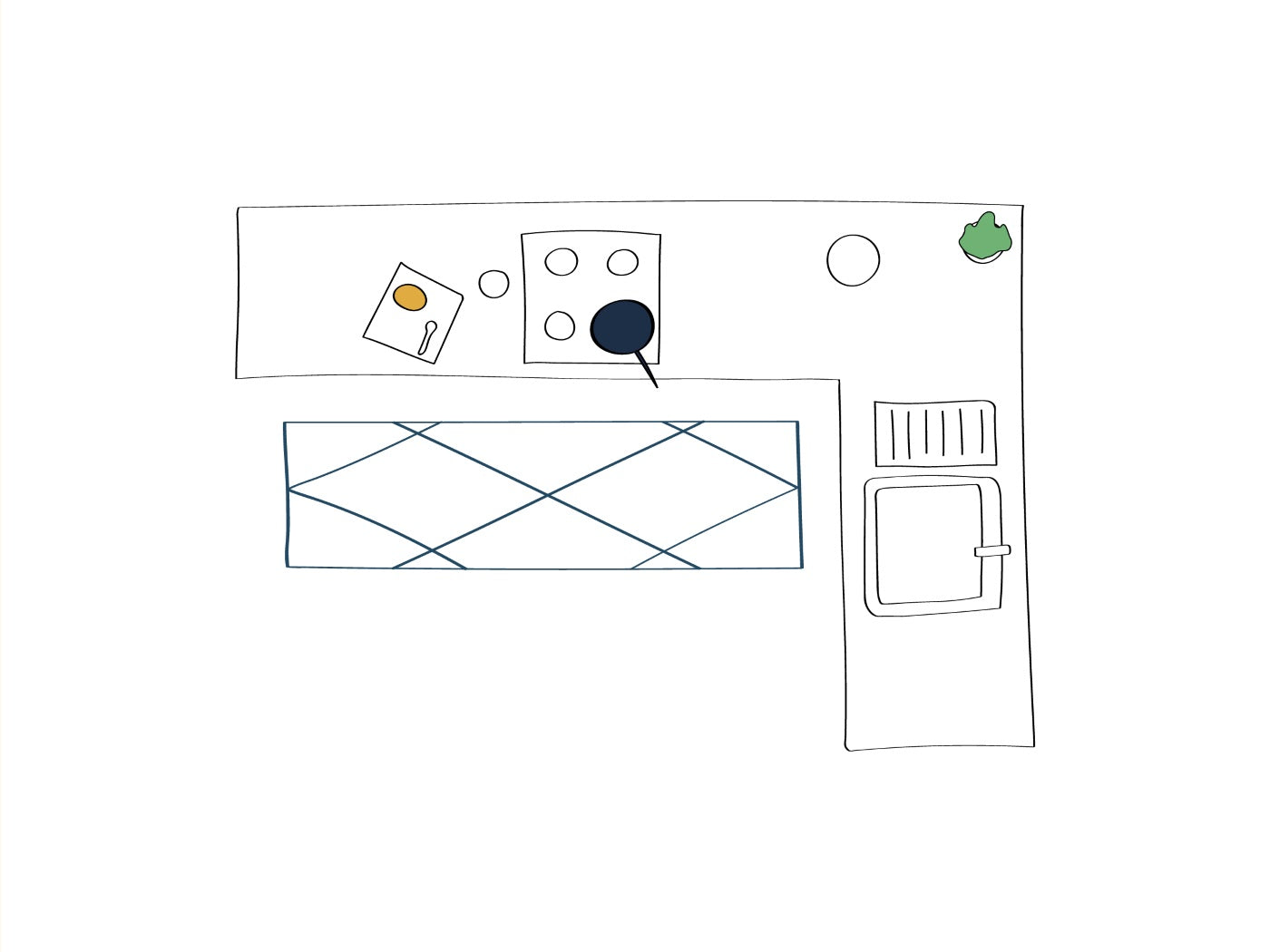
In the kitchen, materials take centre stage and decoration becomes a measured accent. Start with a calm base: limewashed walls or textured plaster, natural wood (even dark, if the space can handle it), satin-finish metals, and a warm neutral palette — sand, ivory and terracotta. Then introduce one well-designed focal point: a zellige backsplash in tone-on-tone shades or a single-colour field (deep green, petrol blue, milky white), or herringbone-laid bejmat tiles. If you like, finish with a few artisanal details such as trays, handmade tajines, a ceramic or terracotta lamp, a glazed bowl. Let the lighting do the rest: warm, soft, never overly clinical and cold.
If you prefer a more traditional or boho take, you can push it a little further without losing coherence. This works especially in a classic home (for instance, a country-style kitchen with shaker-style framed doors). A colourful zellige mosaic backsplash with bolder geometries can become the visual heart of the room. The trick is simple: let that surface do the talking, and keep everything else more understated. The result is a kitchen with character, warm and authentic.
Moroccan style bedroom
The contemporary Moroccan bedroom is soft and enveloping.
A tadelakt wall-mounted headboard or an arched niche: two solutions that reinterpret the idea of an alcove. A tadelakt headboard adds volume. Inserting it under an arched niche (horseshoe or alfiz ) with a painted back creates a simple and effective architectural statement. Alcoves can also be useful at the sides of the bed with built-in shelves, to avoid cluttering the room with furniture and accessories.
Light pendants: Warm, softly diffused lighting is provided by lamps with textile shades, made of natural materials, ceramic, metal, or opal glass. Integrated lighting in the suspended ceiling or two pendant lamps hanging from the ceiling to either side of the bed are also a great option. The design can be revisited with lanterns or feature organic shapes.
Layered textiles: linen, cotton, wool. A controlled mix, restrained patterns, and only a few accent pieces.
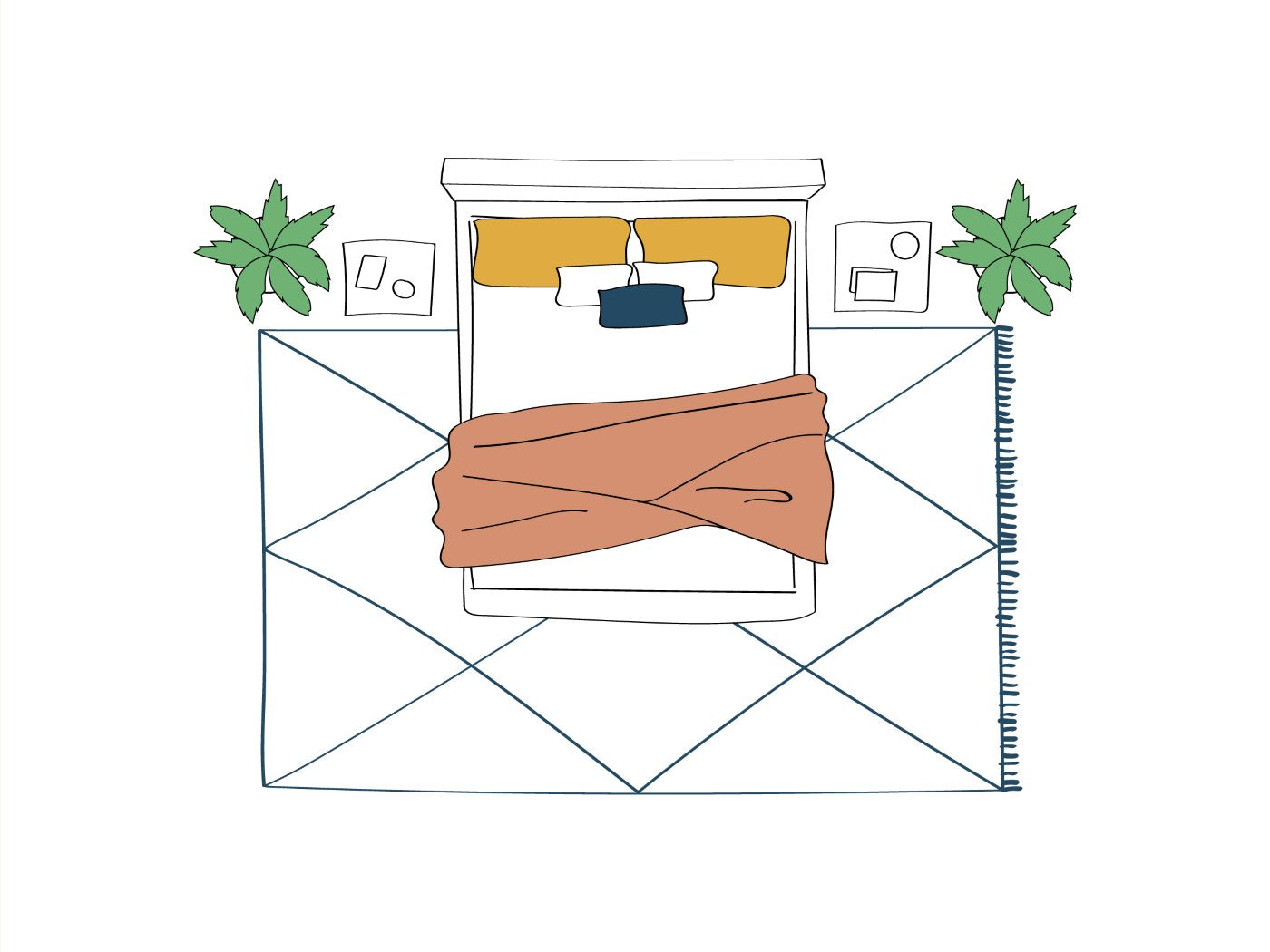
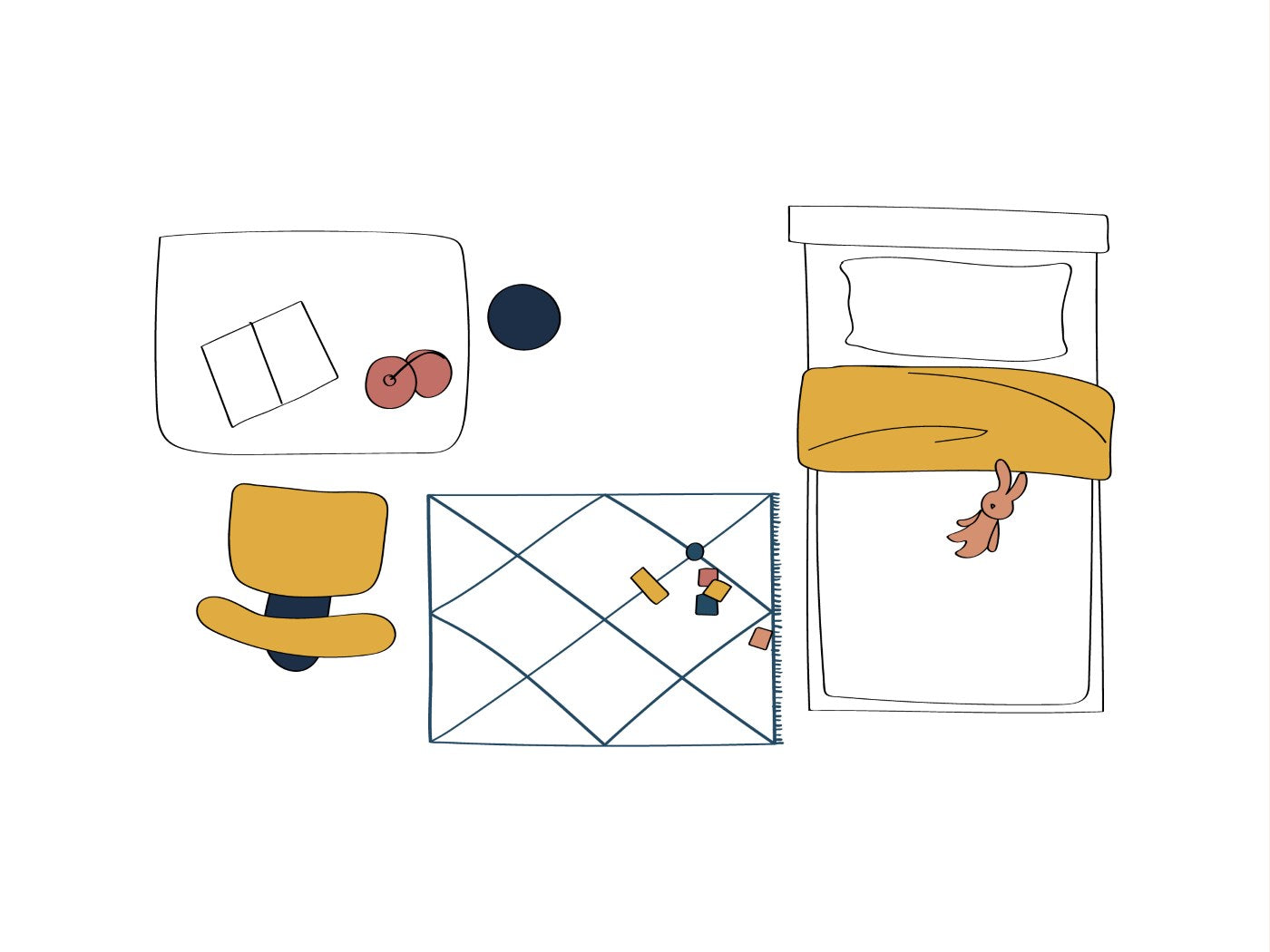
A soft rug at the foot of the bed or as a bedside rug: the bedroom is one of the rooms where a rug creates immediate comfort and gives structure to the sleeping area. Among the Moroccan wool rugs, there's sure to be one that's perfect for your room!
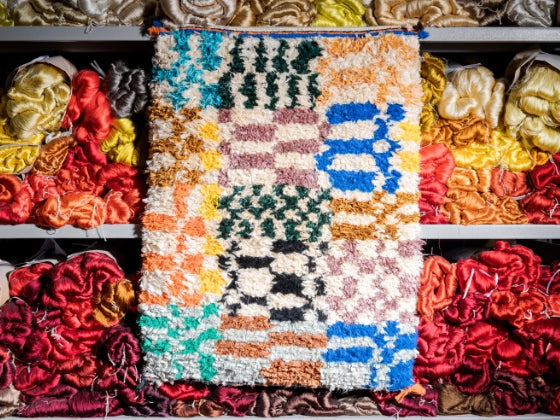
💡 Pro Tip: If you love a warmer, boho-inspired space, you can use a rug as the headboard of a box spring or hang it above a bed with a headboard as a tapestry. You could use a rug slightly smaller or larger than the headboard, or hang Zindekhs individually or on a gallery wall (small rugs now very popular as textile paintings).
Moroccan-style terrace and garden
Outdoors, Moroccan style thrives on textures, shade, and subtle contrasts. A small garden, patio, veranda, or terrace are all outdoor spaces where you can recreate a Moroccan atmosphere with a few distinctive elements. Give free rein to colours and artisanal items like pillows and lanterns.
- Low seating with pillows: built-in benches, sofas, or floor pillows in natural fabrics or multicolored folk-art-inspired patterns. Everything should invite you to sit and relax.
- Outdoor rugs: perfect for creating visual islands with a strong material presence. If the areas are covered, you can also dare to use Saharan mats or Moroccan palm straw hassiras!
- Lanterns and warm light: create soft, diffused lighting. Choose handcrafted lanterns and lamps made of natural materials or metal.
- Potted plants: dwarf palms, cacti, small olive trees. Essential but impactful vegetation. A Moroccan garden can't be created just anywhere, for obvious climatic reasons, but with the help of a skilled gardener, you can select the right plants to create the perfect atmosphere.
- A light and textured palette: sand, ivory, terracotta, brown, the green of plants, wood, and stone. Natural and unadulterated.
Moroccan style vs. Mediterranean style
At first glance they seem related – they both love texture, sunlight, natural tones – but the difference lies in the way they use that same material.
The Mediterranean style opens up; it favors light, flat surfaces, volumes that expand in direct light, and a simplistic, airy aesthetic: stone, wood, and terracotta express a radiant, linear beauty.
The Moroccan style, on the other hand, digs deeper: it works on depth, creating shadows and internal rhythms. Surfaces are layered with small tiles that create patterns, plasters that capture light, niches that modulate the gaze. Colour is given measured intensity, creating an environment that invites you to pause.
So: Mediterranean tends toward openness and lightness; Moroccan seeks internal texture and sensory depth. There are slight differences even in the choice of palettes, but the underlying architectural approach is different.
Moroccan style vs. Moorish style
Moorish is a historical and monumental language, widespread between the Maghreb and Andalusia, recognizable by its horseshoe arches, muqarnas and complex decorations, arabesques and inscriptions, and a strong link with religious and palatial architecture.
"Moorish" is a word that evokes monuments such as palace courtyards, sculpted vaults, and arabesques that fill sacred or public spaces. It's a historical and symbolic code, designed to allow decoration to speak on a grand scale.
Compared to this, contemporary Moroccan furniture appears more domestic and pragmatic: it inherits certain forms and motifs, but reinterprets them for everyday living. Here, ceramic is fragmented into useful tiles, tadelakt becomes a practical finish, and niches are designed for seating or storage, not for show.
If Moorish is an architectural manifesto, Moroccan is a domestic grammar: less monument, more craft, less literal ornamentation and more material choice aimed at giving quality to the lived space.
Mistakes to avoid and how not to fall into cliché
And now let's move on to the final part of this post. Let's get practical: what are the mistakes we can make when trying to create a Moroccan-inspired interior?
- Too much is too much
The most common mistake when it comes to Moroccan style is doing too much. Too many colours, too many patterns, too many "Moroccan-looking" objects thrown together without any logic. The result isn't an inspired interior, but rather one without a true signature. - A chromatic overdose
...especially in small homes. Contemporary Morocco isn't an explosion of loud, predictable hues, but rather a balance: calm surfaces, a few strong accents, and materials that breathe. If the space is limited, a muted backdrop—light lime, natural woods, soft lighting—works much better, along with one or two bold accents: a colourful niche, a distinctive rug, a handcrafted object that knows what it's doing there. - Casual mix of "ethnic" pieces
A casual mix with no connection to the architecture. A contemporary Moroccan space isn't born from accumulation, but from coherence: a well-defined volume, a carefully chosen material, a palette that doesn't contradict the room. - Ready-made matching sets
Rely only on matching "Moroccan-Berber-style" sets found on marketplaces. Better to opt for a few handcrafted pieces — genuine, tactile, with just the right amount of imperfection — chosen one at a time and placed in the right context. Just two well-crafted objects are enough to give direction to the entire space. - Fake "Berber" rugs produced outside Morocco
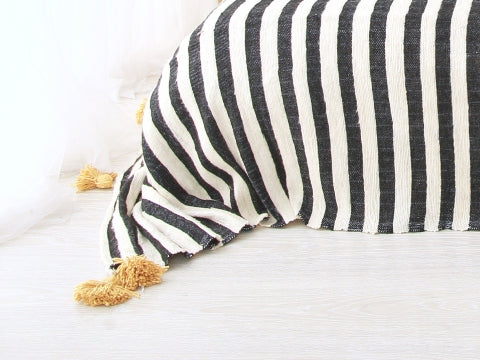
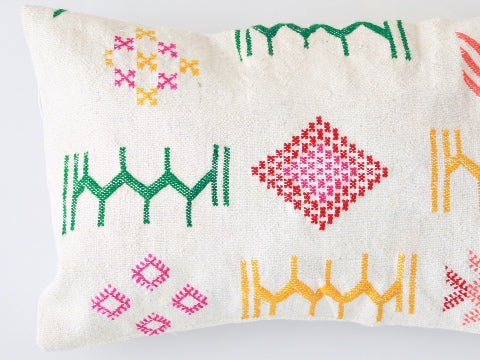
If you want to bring an authentic Moroccan rug into your home without turning your living room into a stage set, count on us: in our selection you'll find many handcrafted wool rugs as well as furnishing accessories like pillows, blankets, and poufs!
Buy with awareness: true luxury is ethical
Let's close with a simple idea: contemporary Moroccan style isn't bought "on theme", it's built with conscious choices. When possible, opt for ethical and traceable purchases, made up of a few authentic pieces that fit seamlessly into the overall design, rather than soulless, coordinated sets. This keeps tradition alive and avoids becoming mere stagecraft.
Contemporary Moroccan style isn't bought "on theme", it's built with conscious, ethical and authentic handmade pieces
And above all, it's worth looking at where Morocco is truly innovating today: in the hands of artisans and young designers who are rewriting the rules of interior design, experimenting with traditional indigenous materials and time-honored techniques to create a new, essential language rooted in the land. If you want to bring this balance into your home, start with a strong, authentic element — a rug, a fabric, a lamp — and let the material do the talking.
For the list of places to visit in Marrakech we took inspiration from this article from Vogue
For more information on Moroccan architecture: Wikipedia
Thanks to Yaz and AD Middle East for introducing us to new designers and architects