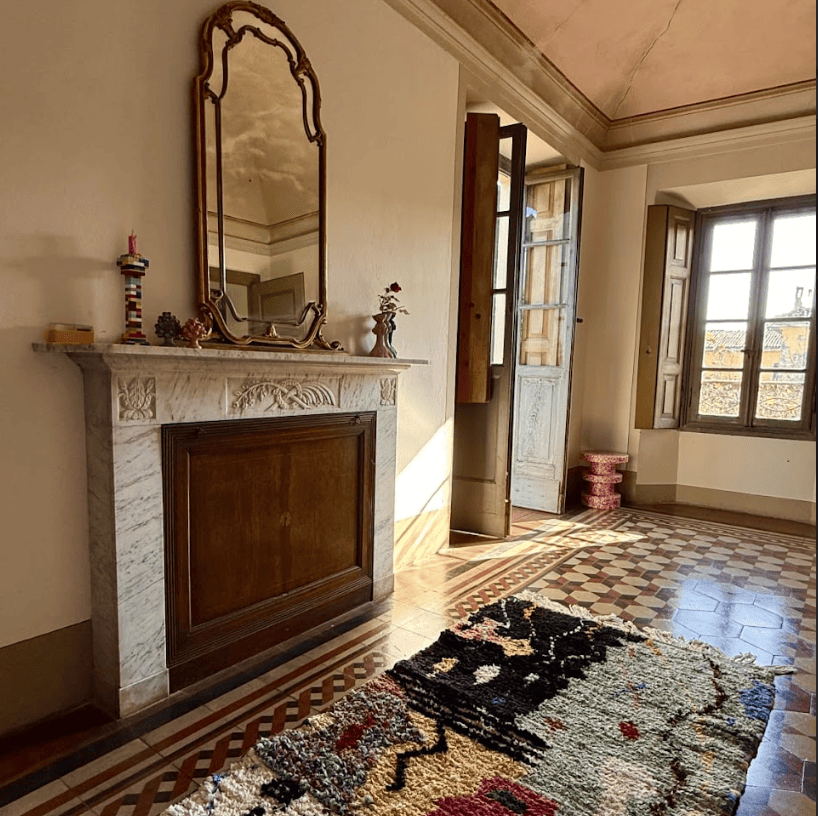

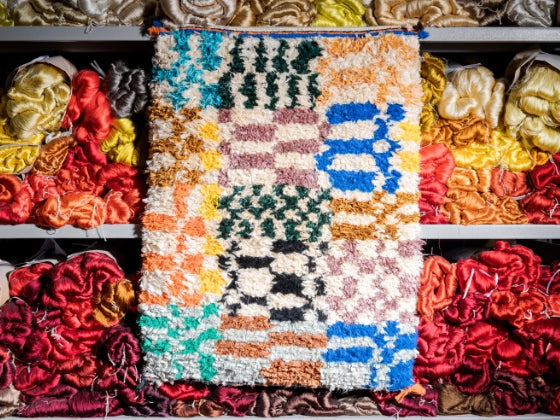
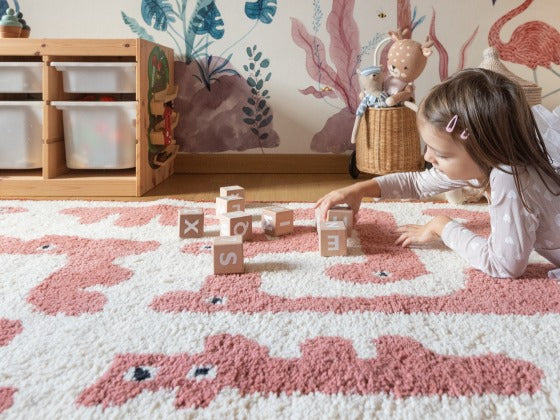

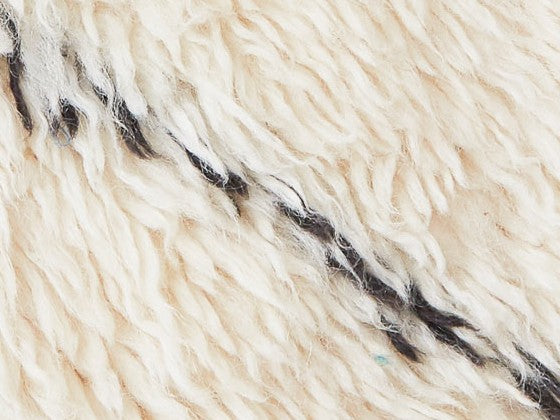




The living room rug is the piece that holds the space together: it connects the sofa, armchairs, coffee table, and floor, making the conversation area more welcoming. If chosen well, it can make the difference between an "OK" room and a thoughtfully designed living area that expresses personality and taste.

Precisely for this reason, however, it's also one of the elements that raises the most doubts: is large or small better? Short or long pile? Neutral or colorful? And above all: how to position it in relation to the sofa and coffee table, without messing up the proportions?
If there's one room where a rug really shines, it's the living room. And it's also the room where it's worth investing: that's why this guide starts there.
We'll help you organize your rug with simple criteria and a few interior design tricks, helping you choose the right rug based on size, style, colors, materials, and daily habits.
We thought of practical ideas and honest indications on what really works over time – in perfect Casa Amar spirit – because for us, rugs are design elements (as well as a piece of the heart), not disposable decorations .
What you will find in this guide
Living room rug size: how to choose
When it comes to choosing a rug for the living room, the first concrete choice concerns size: this is where much of the final effect comes into play.
A rug that's too small in front of the sofa risks looking like a tiny island floating in the void, while a well-sized rug anchors the conversation area, immediately giving the living room the feel of a well-designed space.
The idea is simple: it's better to think of the rug as a support base for the sofa, armchairs, and coffee table, rather than as an accessory placed in front of them.
For this reason, the rule we prefer at Casa Amar almost always applies: if you are undecided between two sizes, it is much easier to make a slightly larger rug work than one that is too small .

- Accurately measure and simulate floor space.
Using masking tape, draw the area of the rug and immediately evaluate its proportions. In the living room, as a base, the rug should be at least as wide as the sofa ; when space permits, it works even better if it protrudes 20–30 cm on each side . - Leave a visible floor frame.
It is generally useful to keep 20–30 cm between the carpet and the walls so as not to create a carpet effect. - Anchor the furniture to the carpet.
For a balanced result, rest at least the front legs of the sofa and armchairs on the rug; in large living rooms, an extra-large rug can also accommodate the rear legs and create a more dramatic living area. - When in doubt, choose the next size up.
A small rug fragments the room: it is often easier to make a larger rug work, as long as it does not cover too much floor space.
This doesn't mean you always need an extra-large rug, but it should embrace the conversation area , not clash with the walls or float alone. This principle alone will help avoid the "doormat or carpet" effect.
Most commonly used living room measurements (and when they work)
Let's recap the most common sizes for a living room rug:
Small rugs (up to 170x110 cm)
It's not the ideal size; it can be an accent choice that works in very small living rooms or those with a particularly narrow and long shape, or to define a specific area of the living room (under a coffee table that you want to highlight or to define a reading corner).

Medium rugs
(up to 160x260 cm)
The most versatile sizes for a medium-sized living room rug are 140x200 cm and 160x230 cm: they clearly and proportionately define the relaxation area. They are used with the coffee table and front legs of the sofa resting on the rug, thus creating a well-defined conversation area.
Large rugs (up to 300x200 cm)
A rug measuring 200x300 cm, 240x340 cm, or 200x290 cm is a true large rug: these sizes are designed to anchor the entire conversation area (sofa, armchairs, and coffee table) and give the living room a more architectural feel. Placement guides agree on two rules of thumb: the rug should extend beyond the sofa on the sides, and the main seating should be partially or completely on top of the rug, so the area appears cohesive and unified.

Very large rugs (over 300x200 cm)
An extra-large rug is designed for open spaces and spacious living areas, where all the furniture in the conversation area rests entirely on the textile surface. The area appears cohesive and part of a sensible design.
XL sizes pair well with freestanding furniture (not against walls). A luxury for very large spaces.
These are guidelines based on the most common sofa sizes and the most commonly used proportions in interior design. However, every home has its own unique balance, which is why in some cases it's advisable to use custom-made rugs.
We offer this service, also with the possibility of creating unique pieces based on designs.
The relationship between rug and sofa: the 3 most common configurations
How to place a rug in the living room depends largely on the sofa: here are the three most common situations that resolve the classic dilemma of choosing a living room rug or sofa.
Case 1: only the coffee table on the carpet
Suitable for small living rooms, if the sofa is against a wall or if the rug has a dramatic presence or decorative elements that shouldn't be hidden. The rug acts as a base for the coffee table, leaving the sofa a few dozen centimeters away.
Advantage: Clean look and a room that feels larger. Disadvantage: Less room for conversation.

Case 2: Front feet of the sofa on the carpet (more balanced choice)
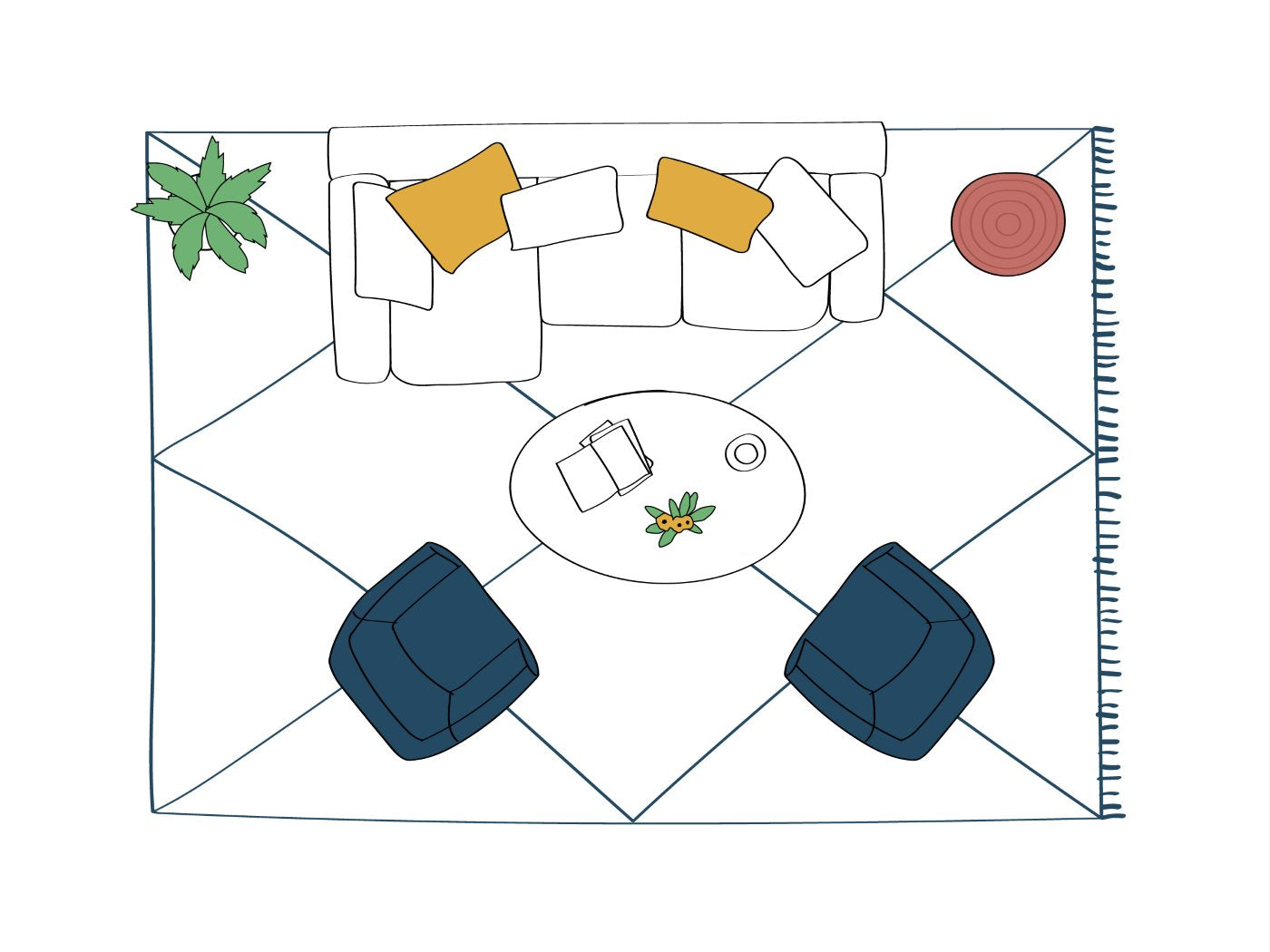
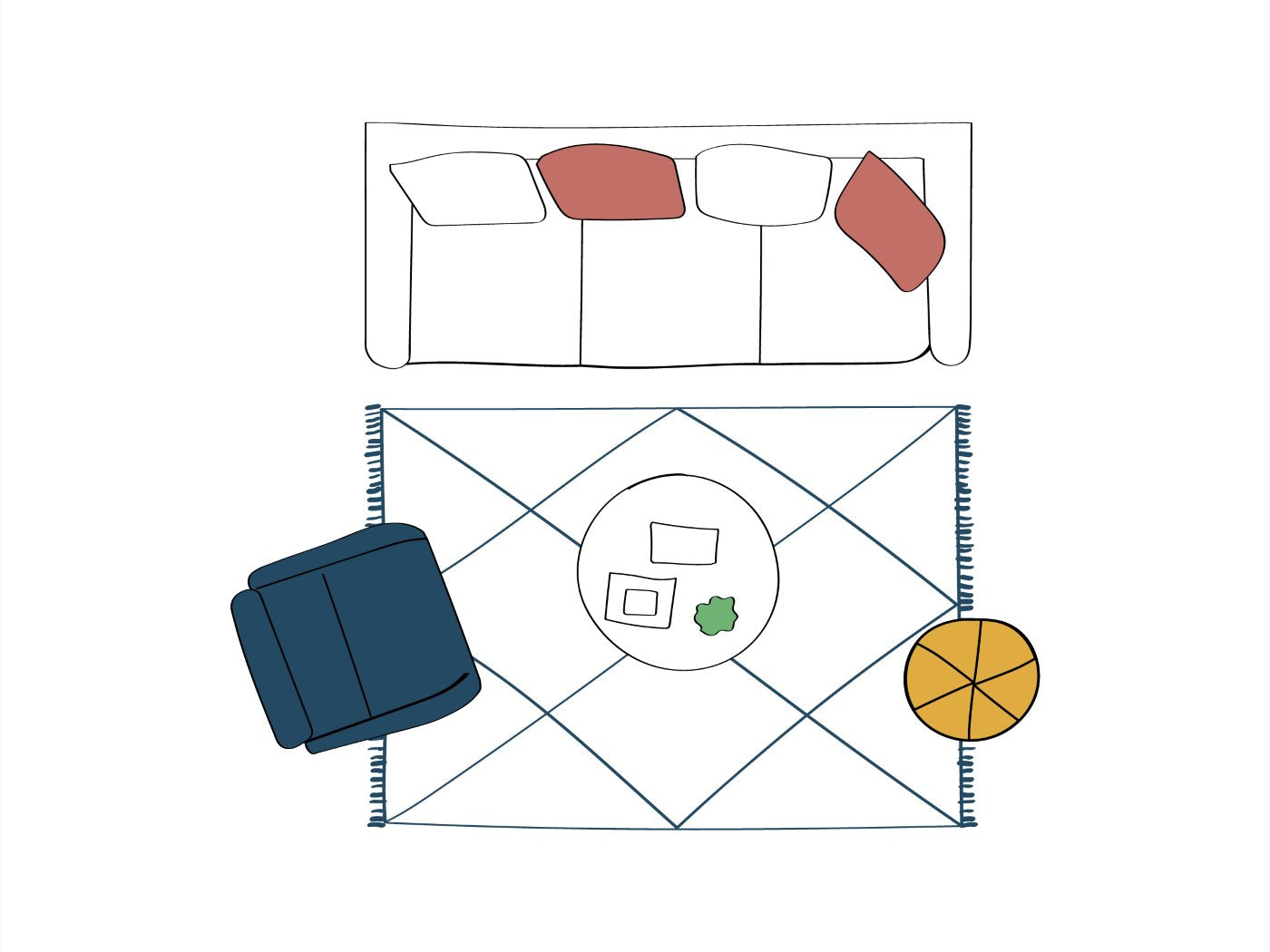
The most versatile and common solution: the front legs of the sofa and coffee table rest on the rug, while the rear legs remain on the floor. The result: the living room immediately appears more intimate and professional, without the "detached rug" effect.

Case 3: large carpet containing sofa + armchairs
For large living rooms and L- or U-shaped layouts: in this case, the rug covers the entire sofa (and ideally the armchairs as well), creating a well-defined island. Ideal when you want a dramatic effect, but be careful not to overdo it with the size compared to the floor.

Distances and proportions: the basic rules for a balanced living room
Once you've chosen the size, distances and proportions will determine the final effect. The key isn't to center the rug in the room, but to align it with the sofa and coffee table to create a harmonious whole.
Alignment: Use the coffee table and sofa as a reference
The correct position is when the center of the rug coincides with the center of the coffee table . From there, the sofa and armchairs are arranged coherently with respect to this axis.
Ideal distances to respect:
- Between the back legs of the sofa and the edge of the carpet: 40–60 cm (never less than 30, to avoid it looking squashed).
- Between carpet and wall: 20–40 cm (wider in small living rooms, to amplify the perception of space).
If your living room is uneven, check the diagonal from the front leg of the sofa to the opposite edge of the rug: it should be uniform. Avoid centering the rug across the entire room, leaving the sofa "floating."
Want to see practical examples and all the possible configurations based on the type of sofa?
A rug under the coffee table? Yes, but with the right proportions.
The coffee table should rest entirely on the rug : ideally, the rug should extend 30–50 cm on each side. This visually anchors the central area and, in open-plan spaces, helps define the relaxation area without partitions.

However, a rug that almost completely disappears under the coffee table is not recommended: the effect is disproportionate, as if there were no solid base.
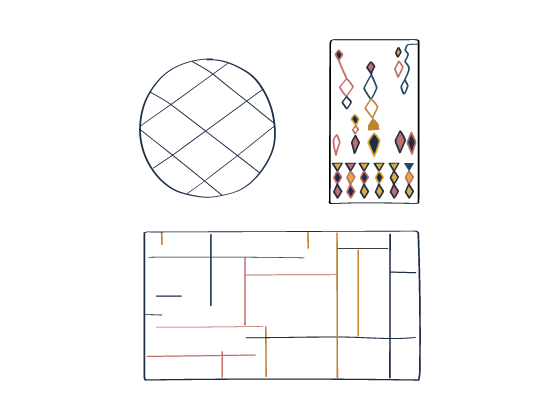
Carpet shape: rectangular, round, oval

Rectangular
The most common (and easiest to make work) shape in the living room remains rectangular, because it follows the overall dimensions of the sofa and coffee table and clearly defines the conversation area. With a linear or L-shaped sofa and a square/rectangular coffee table, alignment comes naturally: the rug becomes the foundation that holds the living area together, especially if it's generously sized.
Rules of thumb:
- Sofa proportion: Choose a rug that's longer than your sofa; as a general rule, it should extend further than the sofa to frame the seat.
- Mistake to avoid: A rug that's too small will "disconnect" the furniture. If you're unsure between two sizes, the larger one usually works better (as long as it leaves a visible edge of the floor).
- In short: if you want a rug that truly decorates and makes the conversation area immediately visible, the rectangular one is the most solid and versatile choice.
Round
It's a sensible choice when you want to soften a living room dominated by rigid lines and square furnishings, or when the focal point is already curved (a curved or rounded sofa, a round coffee table, a reading nook with an armchair, lamp, and coffee table, a large armchair, a small seating group).
Rules of thumb:
- Centering: the round looks best when centered on the main element (coffee table, armchair, conversation area).
- Size: better to be generous: the rug should not look like a “trivet”.
- Space around: Leave a visible frame of floor around it (if possible), to allow the shape to breathe and not squash it against walls and furniture.
- In these cases, the round rug defines a small bubble and makes the area more intimate: it works both in small rooms and in open spaces , where it helps to carve out an area without creating a perimeter that is too “heavy”.
Oval
Like the round rug, the oval rug is also a choice designed to soften the living room's layout. It's a good compromise, especially in elongated rooms, where a rectangular rug risks appearing too "rigid." It pairs well with an oval coffee table and in front of large, curved sofas .
Rules of thumb:
- Centering and Axis: Center the rug over the coffee table and the conversation axis (sofa ↔ coffee table), so the oval shape is intentional.
- Size: a “present” oval is better than a small one.
Note : This is an unusual shape for Moroccan rugs and, more generally, for handcrafted rugs.
And now let's talk about style: which rug to choose based on the living room decor

If you're here, we're almost certain you're aware that a rug isn't just a filler: it's the emotional and proportional glue that holds the living room together, harmonizing textures, colors, and proportions . It should complement the sofas, curtains, lighting, and flooring without ever "shouting out." Given that the choice should always be made with awareness, based on your own tastes or with the help of an interior designer, we've decided to give you some basic tips for matching furnishing styles with living room rugs .
Talking about style when choosing a rug for the living room can be useful, but only if we avoid shortcuts.
In reality, in fact, few living rooms are purely “modern,” “classic,” or “boho”: most homes are a personal balance made up of different pieces, layers of time, and emotional choices.
Therefore, rather than looking for the right rug for a particular style, it makes sense to ask yourself what role a rug should play in the living room: should it calm or add character? Should it unite or create contrast? Should it stand out or blend in?
This is where a truly conscious choice begins.
Modern living room: clean lines, essential patterns, and textures as the main focus

In a modern or contemporary living room, clean lines, essential furnishings and controlled palettes often dominate.
Here the carpet is not so much used to “decorate” as to give depth and measure to the space.
A modern living room rug works well when:
- It has an interesting texture, even if the design is minimal
- use color in a controlled way (shades, low contrasts, tone on tone)
- it accompanies the architecture without stealing the scene
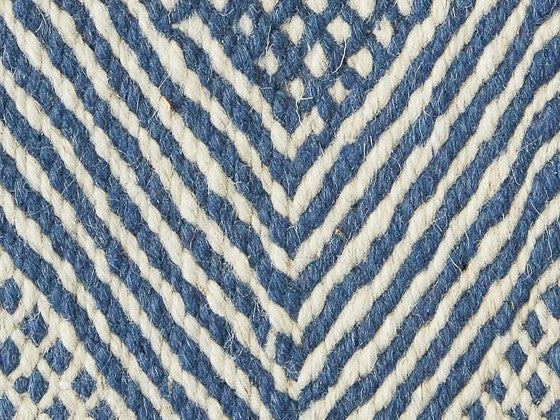
In these contexts, simple, medium- or short-pile wool rugs, rugs with abstract/geometric, non-figurative designs, and antique mats help offset the cold effect without weighing down the space. The rug thus becomes a silent base that holds together the sofa, coffee table, and floor.
💡 Casa Amar Tip: Neutral Beni Ourain or minimal kilim (flat-weave, pile-free rugs) in dove gray, gray, or natural tones are perfect for this type of living room.
A warm, classic living room: when a rug creates continuity
In living rooms with warm materials, more present furnishings or a mix of contemporary and traditional elements, the rug often plays a different function: it creates connections .

A living room rug in these cases can:
- resume existing colors (wood, fabrics, walls)
- introduce a chromatic vibration that makes the whole less rigid
- soften the transition between very different surfaces
Geometric motifs, traditional patterns, or designs that tell a story work well even when imperfect.
The rug becomes an element that visually ties the space together, making it more welcoming and lived-in, without the need to coordinate everything.
💡 Casa Amar Tip: A generously sized Boujaad or Beni Ourain , with warm tones and soft patterns, perfectly complements these living rooms. And why not a beautiful Beni Mrirt ?
Boho living room: layered, handcrafted, "collected" (the rug as the basis and the story)
In the boho living room, style isn't "coordinated": it's personal . It works through layering, a mix of patterns and natural materials, with handcrafted pieces and details that seem collected over time.

Here the carpet can have two roles:
1) Material base that warms and gives rhythm
If you already have a lot of elements in your living room (cushions, prints, books, objects, plants), a natural, tactile base that holds things together without adding visual clutter is often more effective. Saharan mats do just that: they add texture and authenticity, instantly making the space feel more lived-in.
2) Creative accent (the piece that tells the story)
If the furnishings are simpler, the rug can become the element that gives energy: colors, graphics, irregularities and artisanal vibes are perfect in a true boho, because imperfection is part of the language.
Azilal and Boucherouite rugs work very well here, especially if you also want to convey a message of sustainability: recycled materials, upcycling and a free, non-catalogue aesthetic.
A boho trick that always works: think in layers . A more neutral/textured base plus a more artistic piece (or even a tapestry) creates depth without chaos. And this is where Zindekh tapestries come in handy: if floor space is limited, you can "move" the rug to the walls and achieve the same boho effect—warm, personal, creative.
Eclectic living room: intentional mix, common thread and a statement piece
In the eclectic living room, the goal is not to choose "a style," but to compose a whole : elements from different eras and languages (modern, vintage, artisanal, design) coexist because there is a common thread that holds them together—a recurring palette, a dominant material, or a specific mood.
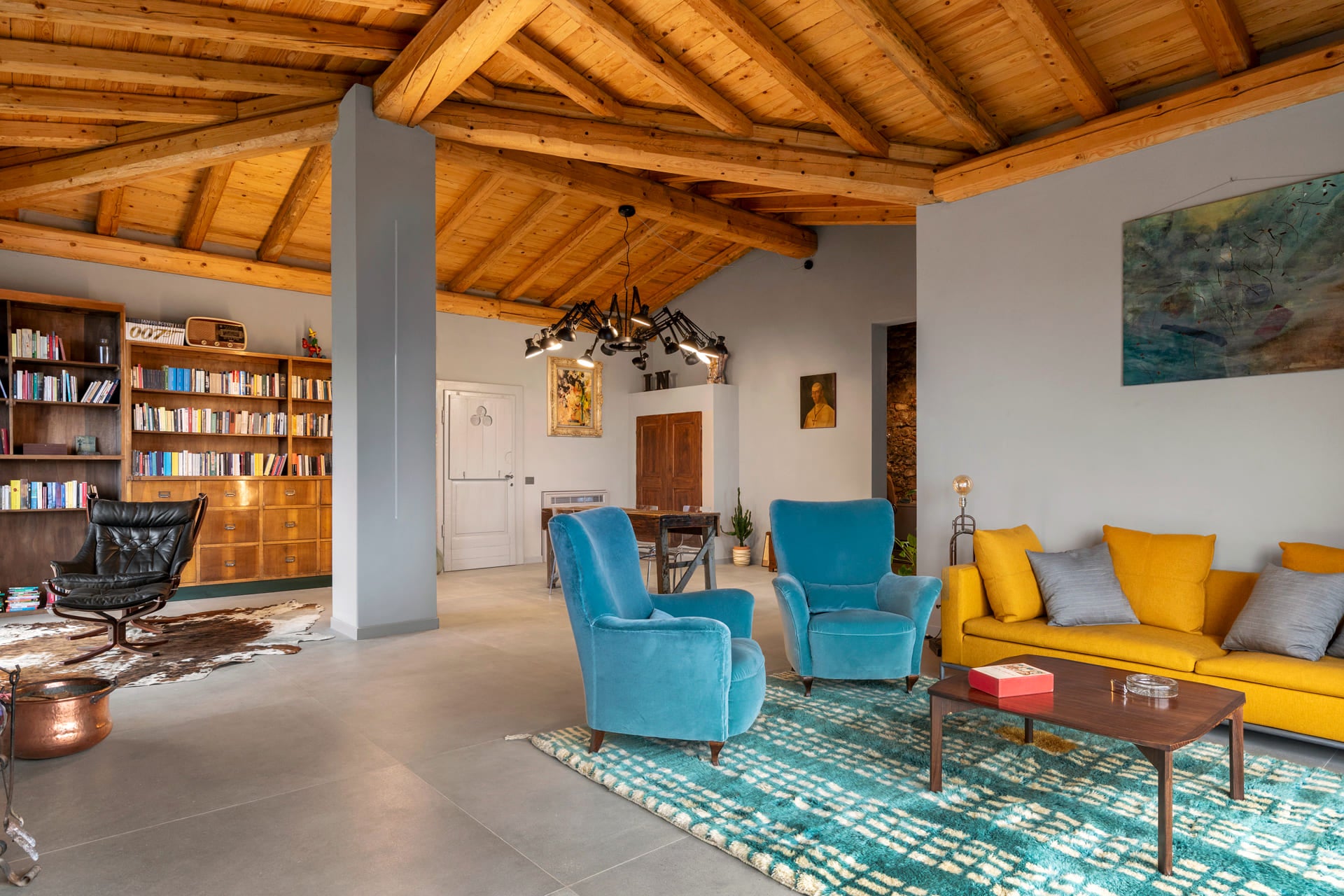
In this scenario, the rug works when it serves as a foundation that creates cohesion (it picks up one or two key colors and creates a rhythm between different surfaces) or when it's the statement piece that lights up the room and sets the tone. The trick is to avoid overcrowding: a few strong elements, well-spaced, and everything else to support it.
One last piece of advice (which is always valid) : there is no such thing as the perfect rug, nor the “right” combination a priori.
Style guidelines serve only as a compass. The final choice, however, always comes from a balance between function, personal taste, and the feeling of home.
Colors: How to choose the right shade for your living room carpet
Choosing the color of a living room rug seems to be based either solely on personal taste or stylistic considerations. What appears to be a purely aesthetic issue is actually much more complex. Color is a powerful tool for defining atmosphere, proportions, and the perception of space.
The right rug shouldn't just please the person choosing it: it should complement the floor, walls, sofa, and other fabrics without creating confusion.
Choosing isn't always easy, so we've written a comprehensive guide below.
Let's think about three main approaches: harmony, contrast, and accent.

Neutral rugs: when to choose white, beige, dove gray, and gray
Neutral-toned rugs almost always work because they allow for the furnishings and natural light in the room. They're ideal if:
- you want to give visual continuity without creating interruptions
- we are looking for a "silent" carpet that enhances the other elements
- you have a living room with many colorful details or patterns
Dark or intense carpets
Deep or saturated tones, such as certain shades of blue, green, or burgundy, work well when you want to add character to a living room or define a conversation area. Use them wisely: a rug in rich, rich hues can add depth to light-colored living rooms and sofas.
- Be careful with proportions: very dark rugs in small rooms can make the space feel smaller if not balanced by light walls or natural light.
- Intense colors should also be chosen based on the existing palette, to avoid excessive color clashes (unless it is a studied and desired contrast!)
Contrasting rugs or color bridges: two simple rules
For those who aren't afraid to take a bold approach, a colorful rug can act as a connecting thread between different elements in the room, creating harmony between fabrics, cushions, and accessories. Two rules of thumb:
- choose one or two dominant colors to avoid a random “patchwork effect”
- Use the shades of the carpet as a reference to other elements in the room (cushions, paintings, curtains)
Materials: Pros and Cons (and Why Wool Remains the Top Choice for Living Rooms)
When deciding which rug to choose for the living room, one of the first things to consider is the material, not only for aesthetic reasons but also for reasons related to comfort, durability, maintenance, and real-world performance.
Let's try to shed some light on the most commonly used materials for living room rugs, without demonizing anything: every material has its purpose, if chosen with awareness and in the right context.
Wool: comfort, resilience and aesthetic appeal (ideal for living rooms)
In the living room, wool is one of the most reliable options when looking for a rug that's both beautiful and practical for everyday use. Not because it's "trendy" (or because we're biased, hehe!), but because it's a naturally high-performance material .

Wool is:
- elastic: recovers its shape even after frequent passage
- heat-insulating: pleasant both in winter and in the mid-season
- dirt-resistant: thanks to natural lanolin
- aesthetically rich: absorbs light softly and deeply
A wool rug in the living room works well whether long-pile, short-pile, or flat-woven. Its value, in fact, depends on the type chosen; each model enhances the space and interior design choices in its own way. And if you're looking for a soft rug for the living room, comfortable underfoot yet durable, high-quality wool treated properly ensures unparalleled softness and warmth .
It's the material that best withstands daily use, prolonged sitting, and the passage of time around the coffee table. We'll never stop extolling the benefits of wool! That's why we've written an essential guide to its benefits, maintenance, manufacturing processes, and interesting facts. You'll find it below.
Cotton and other flat/thin fabrics: practical and lightweight, easier look
A cotton rug or other textiles in the living room? Of course, why not consider it? Think of a beach house or a rented apartment, or any situation where you want to personalize the living room without investing too much and without adding a rug that's expensive (in terms of style, maintenance, and budget).
The advantages?
- they are thin and easy to handle
- they fit easily even in small spaces
- they have a more informal and relaxed aesthetic
- they can be cleaned in the washing machine (if the size allows it!)
- They are practical when the living room is truly lived in: spontaneity and ease of management are better than "perfection"
A perfect example of a colorful, effortless woven rug are the Boucherouite rugs : Moroccan rag rugs, full of energy, which bring character and color to even the simplest spaces.
Of course, a cotton rug for the living room can't offer the same comfort and quality as a wool rug: it's more of a design choice. Generally, to get the most out of them, it's helpful to include an underlay (so they stay in place) and, if you like the textured effect, they can also be layered : for example, over a natural mat, which acts as a base and adds structure.

They're ideal for informal, lived-in living rooms, second homes, vacation homes, or rental apartments, or when you're looking for a rug that's easy to change and has a more natural, rather than "statement-like" visual impact. They're a must-have, considering the right balance between budget and style.
Plant fibers: jute, straw, and wood for those who love natural, textured rugs
Let's start with the jute rug , a highly sought-after classic that appeals for its textured feel and the natural effect it brings to a space. Visually, it works very well, especially in lived-in, informal spaces. It's a low-cost solution, but it does have some disadvantages:
- it is stiff to the touch
- fears humidity
- it wears out more easily in high traffic areas
- he doesn't like constant rubbing under tables and sofas
In the living room it can work as a decorative element, but it is not the most comfortable or the most durable choice if the area is used a lot.
Among the plant-based fiber alternatives, but with superior quality, strength, and durability, are Hassira palm straw mats or palm wood rugs . It's a completely different investment, but the result is also different.

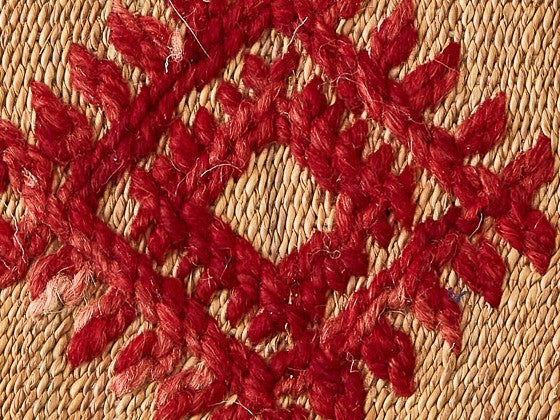
Hassiras are traditional handcrafted pieces made from palm straw. They may include decorations made from wool or mixed yarns.
Palm wood rugs, also known as Saharan or Tuareg mats, were originally created by nomads to protect their tents or as flooring. Today, they are unique and rare pieces, destined to disappear, and can also be found in art galleries and museums.
Viscose / sabra: beautiful and delicate silk effect
Among the most popular contemporary solutions, the viscose living room rug stands out for its variety of patterns and colors, as well as its silky, luminous effect that conveys a unique sense of elegance and refinement. Viscose is often also called rayon or "art silk" because it imitates the sheen of silk, at a more affordable price.

Beautiful to look at, less forgiving in everyday use. The problem is, this beauty comes at a price in terms of maintenance: viscose rugs are delicate and sensitive to humidity. Even a small amount of water can leave marks, stiffen the fibers, or trigger yellowing typical of cellulose fibers. Furthermore, viscose tends to show signs of wear under the weight of furniture and furnishings. It's a material that performs best in a living room with little traffic and if you accept the idea of more careful maintenance, with professional, low-humidity cleaning.
Note: When we talk about “sabra / cactus silk” in many cases we mean a vegetable yarn with a shiny effect, and not a fiber actually obtained from a cactus.
Synthetics: when they make sense
...if we say NEVER are we too bad?
No, sorry, let's get serious!
Synthetic rugs aren't all the same: there are entry-level solutions as well as high-end products designed to withstand everyday use. Generally speaking, they're a sensible choice when the goal is practicality and a highly controllable (or even "on demand") flat aesthetic. Printing techniques allow for highly detailed, decorative, and even realistic designs (almost like paintings or wallpaper), which are often difficult or impossible to achieve on a traditionally handcrafted rug.
The objective pros are ease of management, resistance (they can withstand passage, animals and intense routines well), and maximum freedom of design.
The disadvantages (to consider before purchasing) are a less comfortable and “hand-feel” feel than natural fibers, marks and flattening in high-traffic areas or under furniture, and a lifespan that varies greatly between products.
If the carpet is meant to be a valuable design element and a key element of the interior style, synthetic is unlikely to be the best option.
Short-haired, long-haired...or none? Choose based on daily use and care.
Pile length is both a functional and aesthetic choice: it affects how easily the rug is cleaned, how well it retains dust and dirt, and how well it adapts to the daily routine of the living room.

Choosing between a short-pile and a long-pile rug means honestly considering how you'll actually use the space and how much care you're willing to give it. Although, as we'll see, the difference isn't that huge!
Short hair: more practical, perfect for a living room that is used "every day"
Rugs with short pile or flat weave (such as wool hanbel/kilims) are among the most popular when simple, daily maintenance is desired.
As written in our maintenance guide (linked below), pile-free wool rugs have these advantages:
- the weave doesn't hold dust as deeply as a long pile, so regular vacuuming is enough to keep them clean;
- you can shake them outdoors, if their size allows it, to quickly remove dust and crumbs;
- even stains can be treated with quick interventions by dabbing (without rubbing) with cold water and neutral detergent, always following the direction of the weave;
- they are lighter (which can make maintenance easier, size permitting)
For spaces in daily use, where there's constant traffic, short-pile carpets tend to maintain a more uniform appearance over time without requiring much maintenance. Furthermore, in high-traffic areas, foot traffic is less noticeable, an aesthetic aspect that shouldn't be overlooked.

Long hair: softer and more dramatic
A shaggy living room rug has a completely different impact in terms of visual and tactile comfort. Especially in Berber wool rugs, the longer pile is an aesthetic and sensorial component that can make a difference, both in perception and in the final choice.
That said, caring for a shag carpet requires specific attention (nothing particularly difficult):
- in the first few months it is normal for it to lose a little excess fibre (a phenomenon called shedding): it is not a defect but part of the artisanal nature of the wool, and can be resolved with frequent vacuuming;
- the vacuum cleaner should be used with caution: low power and an accessory without rotating brushes reduce the risk of pulling the cords too much;
- Stains should be treated promptly by dabbing without rubbing, with cold or lukewarm water and a neutral detergent specifically for wool;
- Here too, if the carpet gets wet, it must be dried thoroughly and in a ventilated area to avoid odors or damage to the fibers.
A longer pile creates a dramatic and welcoming effect, perfect if the rug is a central feature and the space is used more for relaxation than for heavy traffic. However, its maintenance requires consistency and a few more precautions than a short-pile rug.
Nothing so difficult if in exchange we have a cloud of softness to relax on!
In short:
- If the living room is very lived-in and you prefer simple maintenance, short pile (or flat weave) remains the most practical choice.
- If, on the other hand, you want a rug that “pampers” and you have time to take care of it, the long pile gives softness and scenic presence.
Here too, as always, the best choice comes from a balance between daily use, aesthetic expectations, and availability for maintenance, not from rigid rules.
Without fur: kilim and hanbel
Alongside pile rugs, there is an even more basic family of rugs: flat-woven rugs . This category includes kilims , which in Morocco are called hanbel .
They work well in a lived-in living room or in an open space where multiple functions coexist, and are particularly suitable under tables or desks (for example, if you have a work corner in the living room).
- They are vacuumed in a flash : having no fur, daily cleaning is quicker.
- They do not change appearance when walked on : no crushed pile effect or visual marks that come and go.
- They are versatile : they look good both under the dining table and in front of the sofa.
- They move easily : because they are thinner and easier to handle.
The only caveat: being lighter, they can move a little more than a thick rug. This is where the underlay really makes a difference.
In short, if you're looking for a rug with a clean, graphic aesthetic, and want maximum practicality for everyday care, kilims and hanbels are an excellent choice.
Washable living room rugs: what to really expect (without being fooled by marketing)
We're always a bit hesitant about this. We know that "washable rug" is highly sought-after, but we'd like to point out that it also risks being an ambiguous label. Because "washable" isn't a technical term; it's a marketing term. And if it's not clear how, where, and under what conditions a rug can be washed, the risk of disappointment is high.
For the living room carpet, then, large dimensions, natural materials and an aesthetic function also come into play.
Washable doesn't always mean "machine-safe": it depends on materials and construction
Therefore, by "washable living room rug" we mean a rug that can be cleaned with water and/or a special cleaning liquid.
Living room rugs are rarely machine-washable, if only for the obvious reason of size. Unless you have a huge washing machine and a flat-weave rug made of fabric so light it can be folded.
Small handcrafted wool rugs—including Moroccan rugs—are machine washable. Simply follow the same instructions for wool garments and dry them properly. All medium or large rugs, however, should be hand-washed or professionally cleaned.
Translation: when you read "machine washable carpet," always ask yourself what material you're dealing with and investigate the specific washing instructions.
Simple maintenance routine (vacuuming, rotation, stains)
Rather than chasing the rug that “goes in the washing machine,” in the living room it works much better to establish a correct maintenance routine that is consistent with the chosen material.
The basis is simple:
- regular vacuum cleaner, without aggressive rotating brushes, following the direction of the weft
- periodic rotation of the carpet to distribute wear and light exposure
- Immediately treat stains by dabbing and never rubbing, using cold or lukewarm water and neutral detergents suitable for the fibre.
These practices apply to any living room rug, even those labeled “washable.”
For more information on correct methods, mistakes to avoid, and the differences between wool, cotton, and natural fibers, our comprehensive guide remains the reference, which should always be read before any more invasive procedure.
No fears and no mistakes:
Safety and the "wave effect": when you need a non-slip underlay
In the living room, where we often move around barefoot or in socks, safety comes first: a good non-slip rug prevents slips, especially if there are children, pets or smooth floors such as treated parquet, marble or polished stoneware .
The wave effect—when the rug lifts or creases—is dangerous and unsightly: it's caused by lightweight rugs on slippery surfaces or when the underside doesn't grip well. This is where a non-slip underlay comes in, keeping the rug anchored to the floor.
We recommend it for shiny floors, or in homes with dogs/cats and children who might play with the rug. For non-slip underlayment materials, natural latex (lasting 1-2 years) or perforated rubber are best.
Tip: For kilims/hanbels ( flat-weave rugs ), 3 mm felt is perfect because it adheres without altering the texture and can be replaced every 3-4 years. It costs more, but it prevents falls and premature replacements.
5 common mistakes to avoid when choosing a living room rug
When wondering how to choose a living room rug, the question often isn't what to buy, but what to avoid. Some mistakes recur repeatedly, we see them every day, and they're the ones that make a rug seem "wrong" even when, on its own, it would be beautiful.
Here are the most frequent ones.
1. Rug too small
This is mistake number one, no question. A rug left "lost" in front of the sofa and not yet in the conversation area makes the living room look messier and less thoughtful.
The size of the living room rug is crucial here, but the basic rule is simple: a slightly larger rug is better than one that is visibly undersized.
2. Huge carpet that “suffocates” the space
At the opposite extreme from a too-small rug is a rug that takes over. When it visually invades the living room, covers too much floor space, and overwhelms the room's proportions, the result is overwhelming.
A rug should enhance the living room, not dominate it.
3. Color disconnected from the rest of the environment
Choosing a rug as if it were a separate object is another classic. A beautiful color that doesn't complement anything in the living room (not the furnishings, walls, or materials) risks looking like a foreign object.
The rug doesn't necessarily have to "match" in a didactic way, but it should interact with the overall palette. Otherwise, the effect is casual, not deliberate.
4. Long hair in a house with pets (or a busy life)
A shag rug is soft, cozy, and dramatic... true. But with pets, children, or heavy daily use, it often becomes a source of stress.
It's not an absolute ban, but it should be chosen with full awareness, not just for the initial "wow" effect.
5. Incorrect (or absent) anti-slip
A carpet that moves, curls, or slips is not only annoying, it ruins the perception of quality of the entire room.
The mistake here is twofold: not using any underlay, or using one that is unsuitable for the type of floor or the weight of the carpet.
Bottom line: avoiding these mistakes is half the battle.
FAQ
What size should a living room rug be?
The size of a living room rug depends on the area it's intended to furnish, not the room itself. In a traditional living room, the rug should accommodate at least the front legs of the sofa and, ideally, the legs of the side seats as well. A rug that's too small won't "contain" the space and will upset the overall balance. When in doubt, it's best to go a few centimeters larger.
Is a large or small rug better for the living room?
A large rug is almost always better. A small living room rug tends to look like a casual accessory, while a larger rug creates a conversation area and makes the living room look more organized and thoughtful. A small rug only works in very specific contexts (small spaces, decorative use, layered rugs).
How to place the rug with the sofa and coffee table?
A living room rug should be thought of as a base. The most balanced solution is to place it under the coffee table, with the sofa partially resting on top (at least with its front legs). This creates visual continuity and ties the elements together. Placing a rug completely in front of the sofa, without any contact, is almost always a mistake. See further up in the post for a more detailed explanation!
What is the best material for a living room rug?
When it comes to balancing aesthetics, comfort, and durability, a wool rug remains the most elegant choice for the living room. Cotton works well in more casual or temporary settings, while viscose is dramatic yet delicate. There's no absolute "best" material, but wool is the one that best holds up to the daily wear and tear typical of living rooms.
Short hair or long hair?
A short-pile/flat-weave rug is more practical, stable, and easy to maintain: ideal for a living room that's used every day. A long-pile rug is softer and more decorative, but requires more care and attention, especially if pets are present or there's frequent traffic. The choice should be based on actual use, not just aesthetic appeal.
Can a living room rug be machine washed?
Only some washable rugs are machine washable, and this isn't the norm. It depends on the material, size, weight, and weave. The term "washable" often indicates easier maintenance, not standard home washing.
Do you need a non-slip rug underlay in your living room?
In many cases, using rug stops can be helpful. A non-slip rug improves stability, comfort, and safety, protects the floor, and helps the rug retain its shape over time. However, it should be chosen based on the type of flooring and the weight of the rug: always consult with a qualified professional who can advise you!
Where to find the right rug if you don't like choosing "randomly"
By the end of this guide, one thing should be clear: choosing a living room rug is no easy feat, and it's best not to improvise. It's a decision that impacts the balance of the space, daily comfort, and the overall perception of the space.
The problem today isn't a lack of choice. It's excess: thousands of living room rugs, all "right" on paper, but often disconnected from the real world they're meant to be. To find your way around, rather than searching for the perfect deal, it's best to choose a reference point that combines three things: quality, consistency, and transparency.
Specifically, when you're considering where to buy a rug for your living room, ask yourself:
- Can the seller tell you clearly about the materials , technique and origin ?
- Is there consistency between what you see in the photo and what you receive (texture, colors, proportions)?
- Is there anyone who can help you choose based on size , actual use , and maintenance ?
- Is the carpet designed to “last” (even visually)?
Our message to you
At Casa Amar, we've chosen a simple approach: offering a curated selection of handcrafted Moroccan rugs, primarily wool, hand-picked by us, one by one, on site. Not endless catalogs, but pieces that have passed an initial rigorous screening process: quality of materials, workmanship, durability, and firsthand knowledge of the makers.
If you follow us on Instagram, you also know that we now live in Morocco, the country of Jihane and the place that gives life to these splendid artifacts.
In our shop, you'll always find new and unique pieces, and if the choice is difficult (which often happens, and that's normal), consulting makes all the difference. Evaluating proportions, colors, daily use, and lifestyle helps avoid "feeling" purchases that don't really work in the living room. And for all this, we, Jihane and Matteo, are here.
The right rug isn't the prettiest one (for whom, anyway?). It's the one that, once installed, makes you feel at home and makes everything seem right.
Guides and articles that might interest you:
How to Place Rugs in Your Home [With Practical Room-by-Room Examples]How to choose the color of the rug and match it room by room